Flying Officer Nirmal Jit Singh Sekhon, Param Vir Chakra
Flying Officer N. J. S. Sekhon took off in his Gnat during a Sabre raid on Srinagar airfield on 14 December 1971 and was killed in the combat that followed.
Vetnet Editorial
4 min read
At a glance
- Award
- Param Vir Chakra (posthumous)
- Unit
- No. 18 Squadron, Gnat detachment at Srinagar
- Date of action
- 14 December 1971
- Place
- Srinagar airfield
- Home
- Issewal village, Ludhiana district, Punjab
- Commissioned
- 4 June 1967
- Born
- 17 July 1945, Issewal, Ludhiana district
- Service number
- 10877 F(P)
Take-off During the Raid on Srinagar
On 14 December 1971, six Pakistani Sabres bombed and strafed Srinagar airfield. Flying Officer Nirmal Jit Singh Sekhon, a Gnat pilot on readiness duty, took off during the attack.
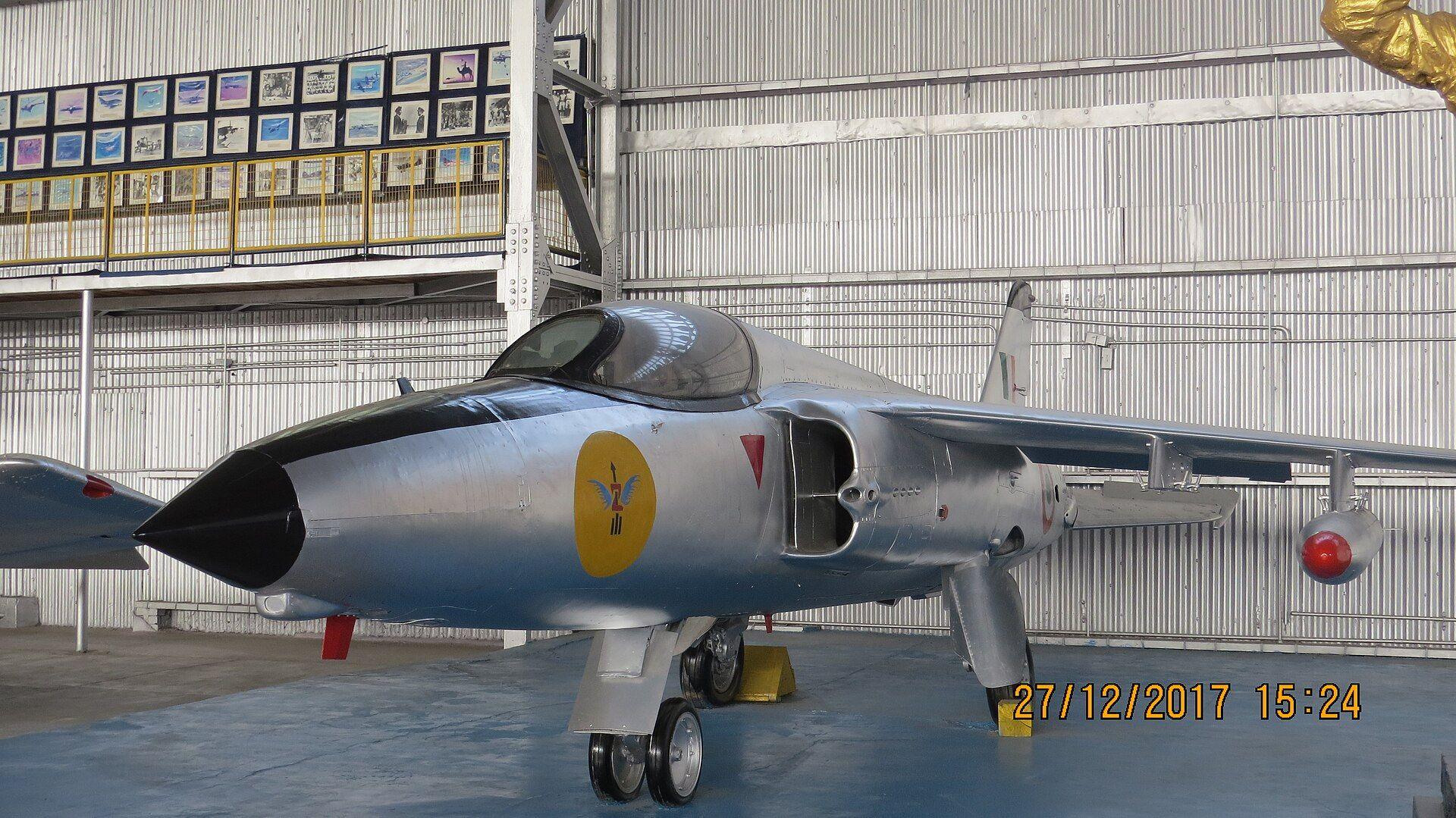
He engaged a pair of the Sabres at once. The citation says he hit one and set another on fire; the National War Memorial's account says he hit one and damaged another.
The remaining Sabres came to their aid, leaving Sekhon outnumbered four to one. He fought on alone at tree top height, and his aircraft crashed. He was killed.
From Ludhiana District to 18 Squadron
Sekhon served with 18 Squadron, whose Gnat detachment at Srinagar was responsible for the air defence of the valley. New India Samachar, a Government of India publication, says he came from a village in Ludhiana district, Punjab, and that his father was an Air Force warrant officer who retired as an honorary flight lieutenant.
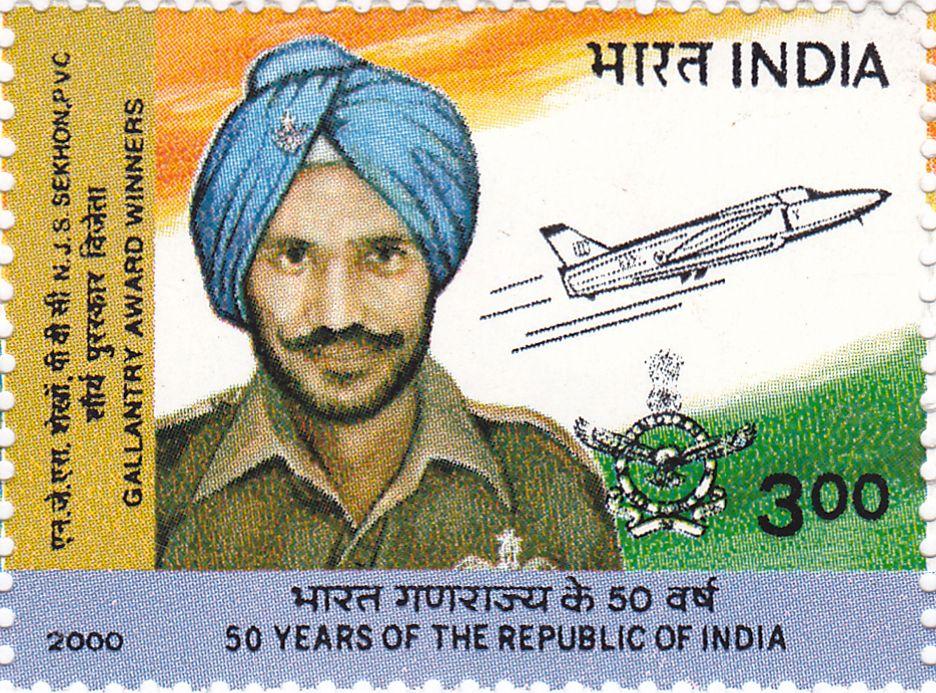
The same publication describes him as the Indian Air Force's only Param Vir Chakra recipient. An island in the Andaman and Nicobar group was named after him in January 2023.
Before Srinagar
The Ministry of Defence's biography gives his date of birth as 17 July 1945 and his village as Issewal, in Ludhiana district. The village was near Air Force Station Halwara, and he was drawn to aircraft from childhood. He studied at Khalsa High School, Ajitsar Mohie, and joined Dayalbagh Engineering College, Agra, in 1962, but left the course midway to join the Air Force.
He was commissioned as a fighter pilot on 4 June 1967 and joined No. 18 Squadron, the "Flying Bullets", in October 1968.
The text of his citation on the Ministry's gallantry awards portal is longer than the version reproduced below. It says that, under an international agreement dating from 1948, no air defence aircraft had been based at Srinagar until the war began, so Sekhon was new to the terrain and not used to the altitude or the Kashmir winter. On 14 December he could not take off at once because of the dust raised by another aircraft that had just left, and by the time the runway was clear the Sabres were overhead. It ends by recording that the enemy aircraft left without pressing home their attack on the town and the airfield.
The citation
Flying Officer Nirmal Jit Singh Sekhon was a pilot of Gnat detachment based at Srinagar for the air defence of the valley against Pakistani air attacks. From the very outbreak of the hostilities he and his colleagues fought the successive waves of intruding Pakistani aircraft with valour and determination, maintaining the high reputation of the Gnat aircraft. On 14th December, 1971 Srinagar airfield was attacked by a wave of six enemy Sabre aircraft. Flying Officer Sekhon was on readiness duty at the time. Immediately, however, no fewer than six enemy aircraft were overhead, and they began bombing and strafing the airfield. Inspite of the mortal danger of attempting to take off during the attack. Flying Officer Sekhon took off and immediately engaged a pair of the attacking Sabres. In the fight that ensued, he secured hits on one aircraft and set another on fire. By this time the other Sabre aircraft came to the aid of their hard pressed companions and Flying Officer Sekhon's Gnat was again out-numbered, this time by four to one. Even though alone Flying Officer Sekhon engaged the enemy inanunequal combat. In the fight that followed, at tree top height, he almost held his own, but was eventually overcome by sheer weight of numbers. His aircraft crashed and he was killed.
The sublime heroism, supreme gallantry, flying skill and determination above and beyond the call of duty displayed by Flying Officer Sekhon in the face of certain death, have set new heights to Air Force tradition.
Source: Gazette of India. Reproduced as printed, including any errors in the original.
Cover image: Krishna Chaitanya Velaga, CC BY-SA 4.0, via Wikimedia Commons. Resized for this page. https://commons.wikimedia.org/wiki/File:N_J_Sekhon_statue_at_Param_Yodha_Sthal_Delhi.jpg
How he is remembered
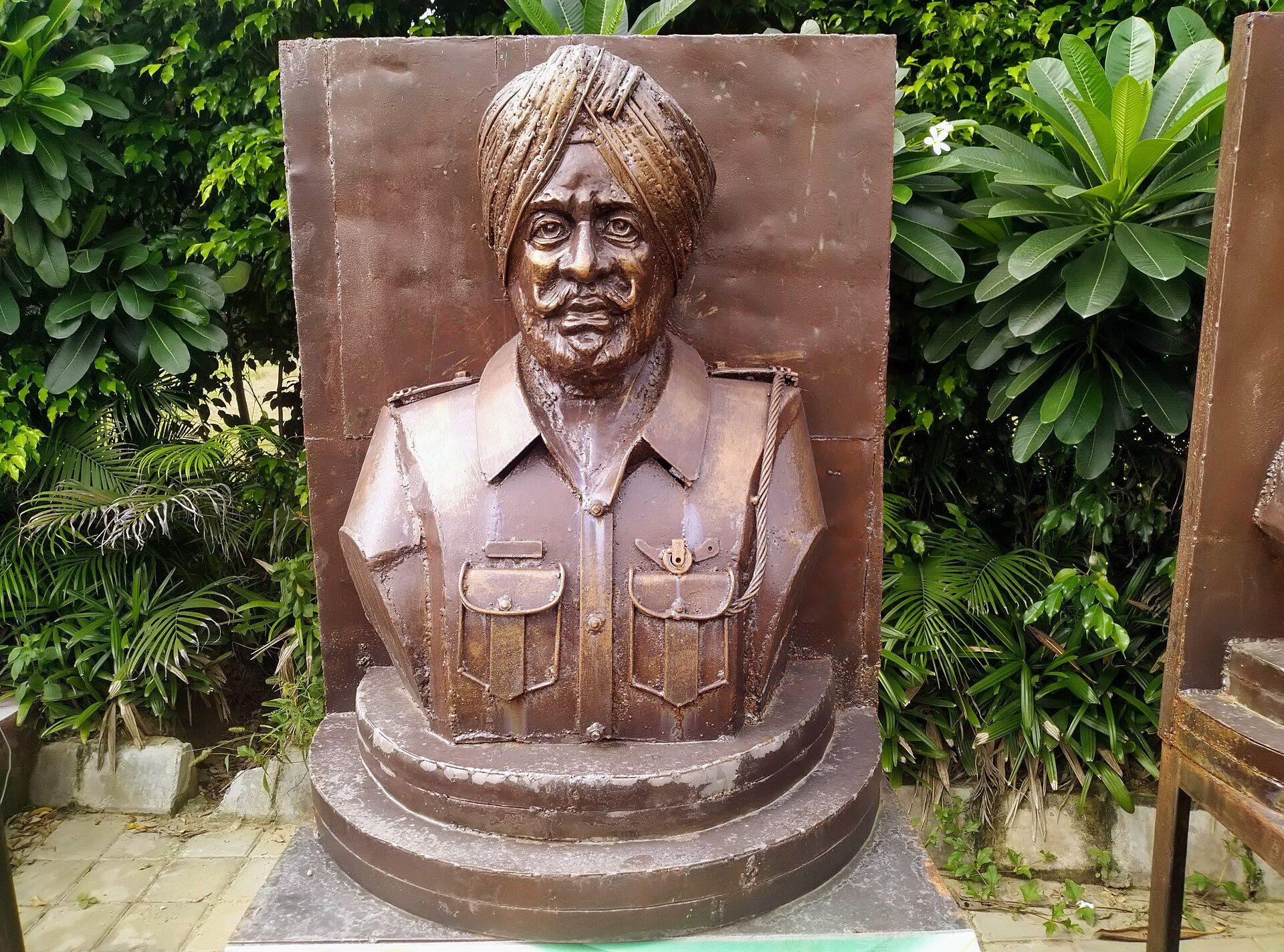
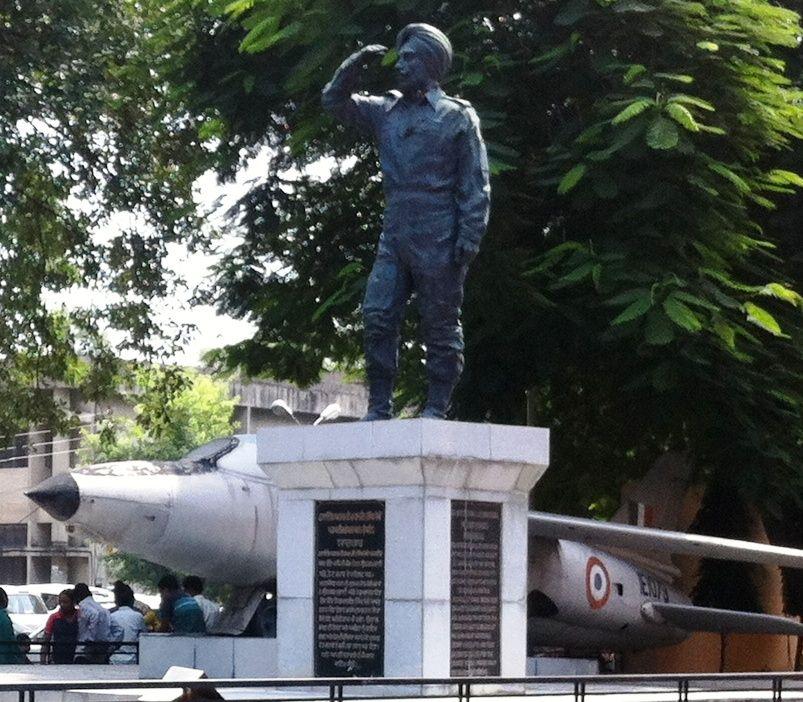
A bust of Sekhon stands at Param Yodha Sthal in the National War Memorial, New Delhi. The Ministry of Defence also lists a statue of him with a decommissioned Gnat at the Indian Air Force Museum, Palam, a road junction named Nirmal Jit Singh Sekhon Chowk, and an oil tanker built in 1985 and named "Flying Officer Nirmal Jit Singh Sekhon, PVC". A film, Shradhanjali, was released in 2021 to mark his life.
On 23 January 2023, Parakram Diwas, the 21 largest unnamed islands of the Andaman and Nicobar group were named after the 21 Param Vir Chakra recipients, the largest island after the first recipient and so on in order. The list released that day names his island Sekhon Island.
- Indian Air Force
- Param Vir Chakra
- 18 Squadron
Sources
- Sekhon's hamlet to be 'adarsh village' · The Tribune
- Batchmates of IAF's lone Param Vir Chakra awardee recall his valour · The Indian Express
- Fg Offr Nirmal Jit Singh Sekhon PVC · Honourpoint (memorial profile)
- Nirmal Jit Singh Sekhon, Param Vir Chakra (Posthumous): awardee profile · Gallantry Awards, Ministry of Defence
- Flying Officer Nirmal Jit Singh Sekhon: biography and citation (PDF) · Gallantry Awards, Ministry of Defence
- PM to participate in programme to name 21 largest unnamed islands of Andaman & Nicobar Islands after 21 Param Vir Chakra awardees · Press Information Bureau
- PM names 21 Andaman and Nicobar Islands after gallantry award winners (PTI) · ThePrint