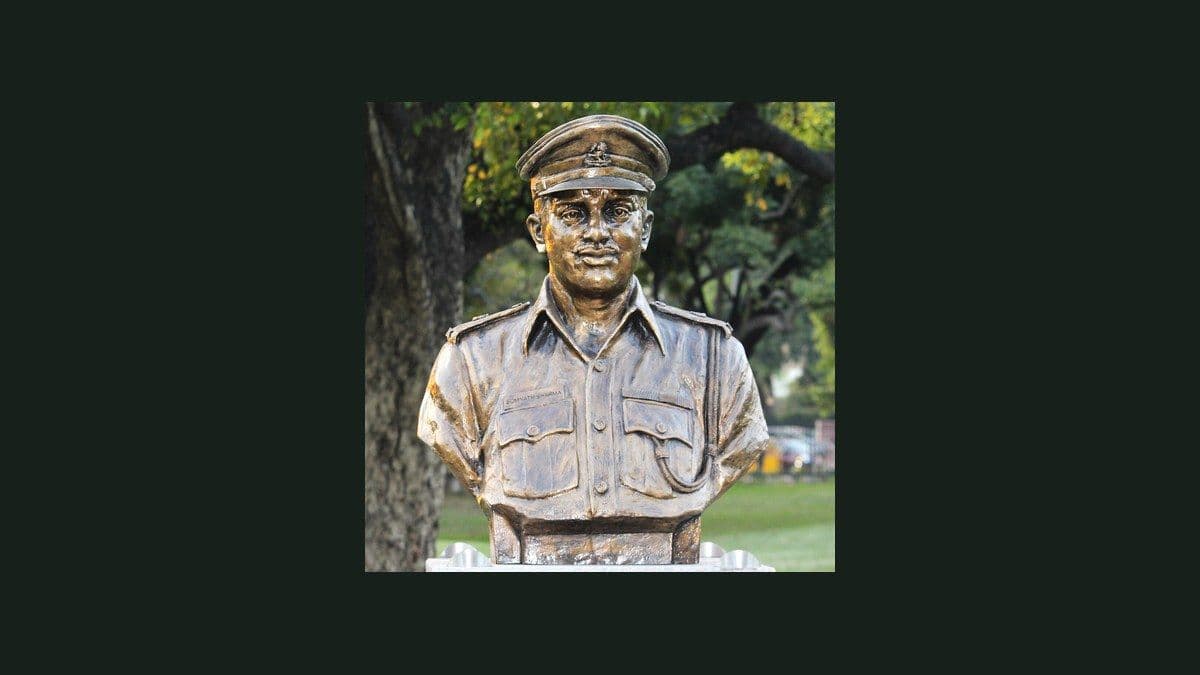
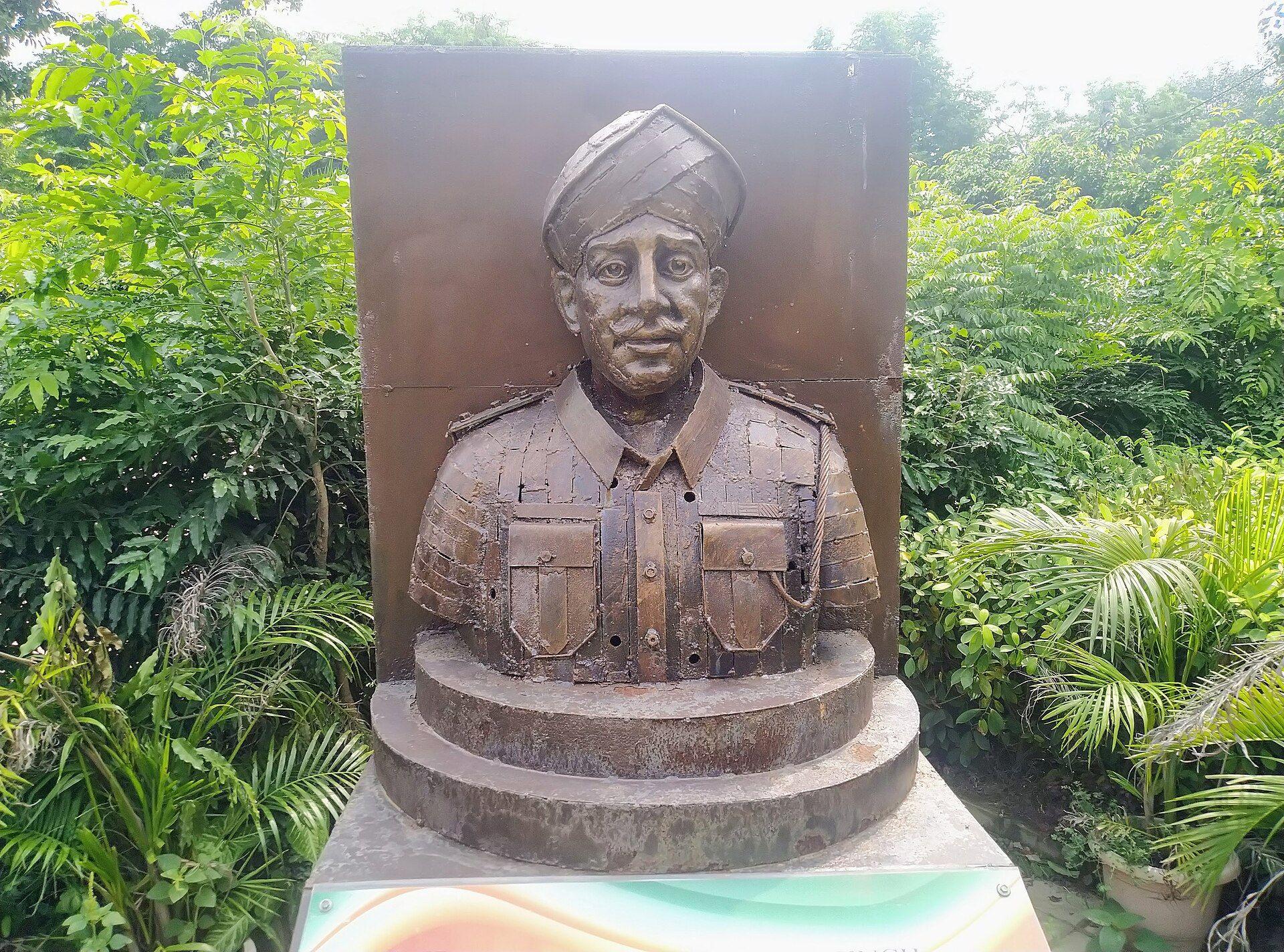
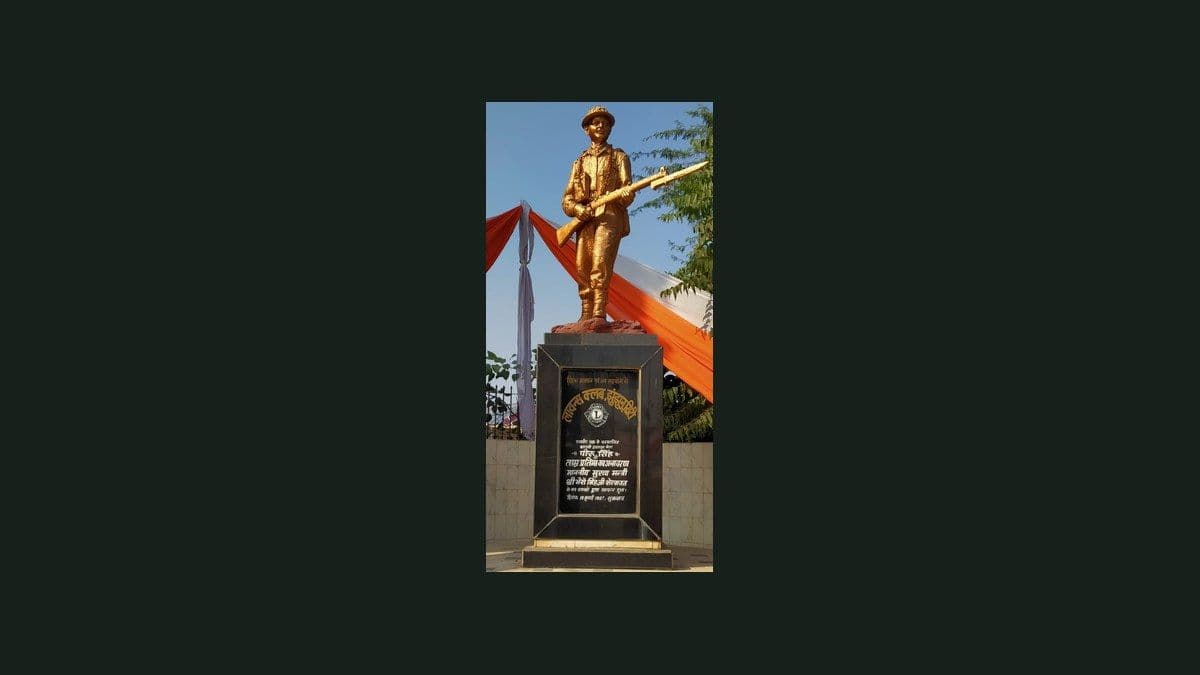
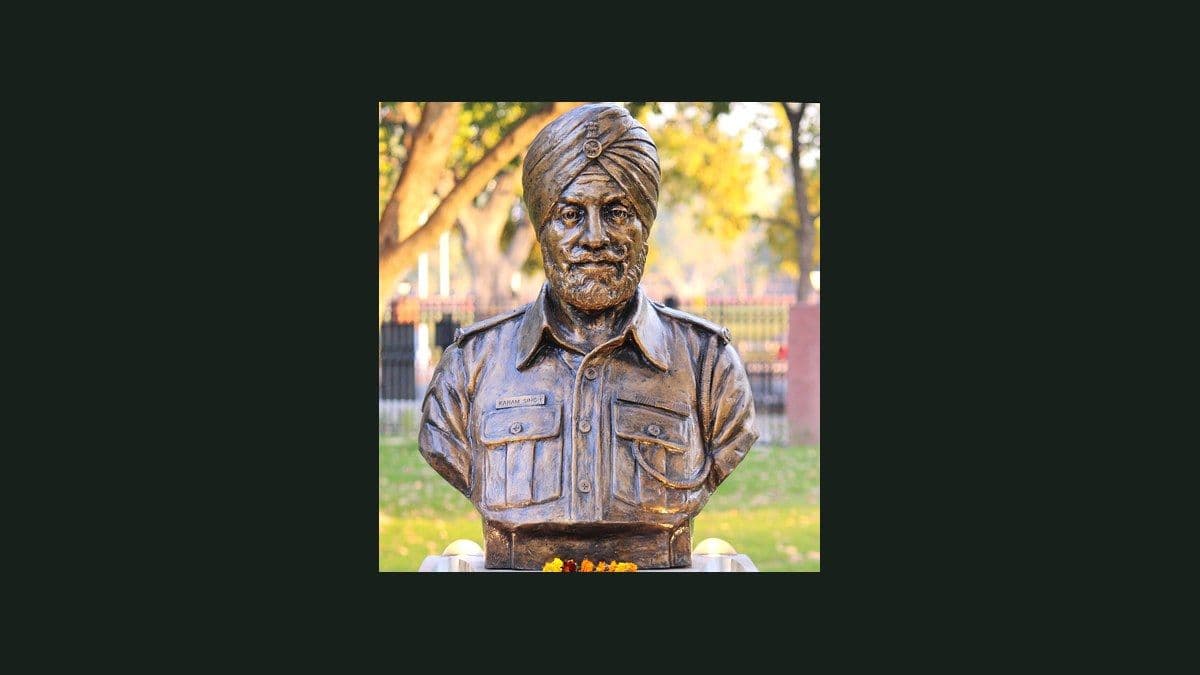
Second Lieutenant Rama Raghoba Rane, Param Vir Chakra
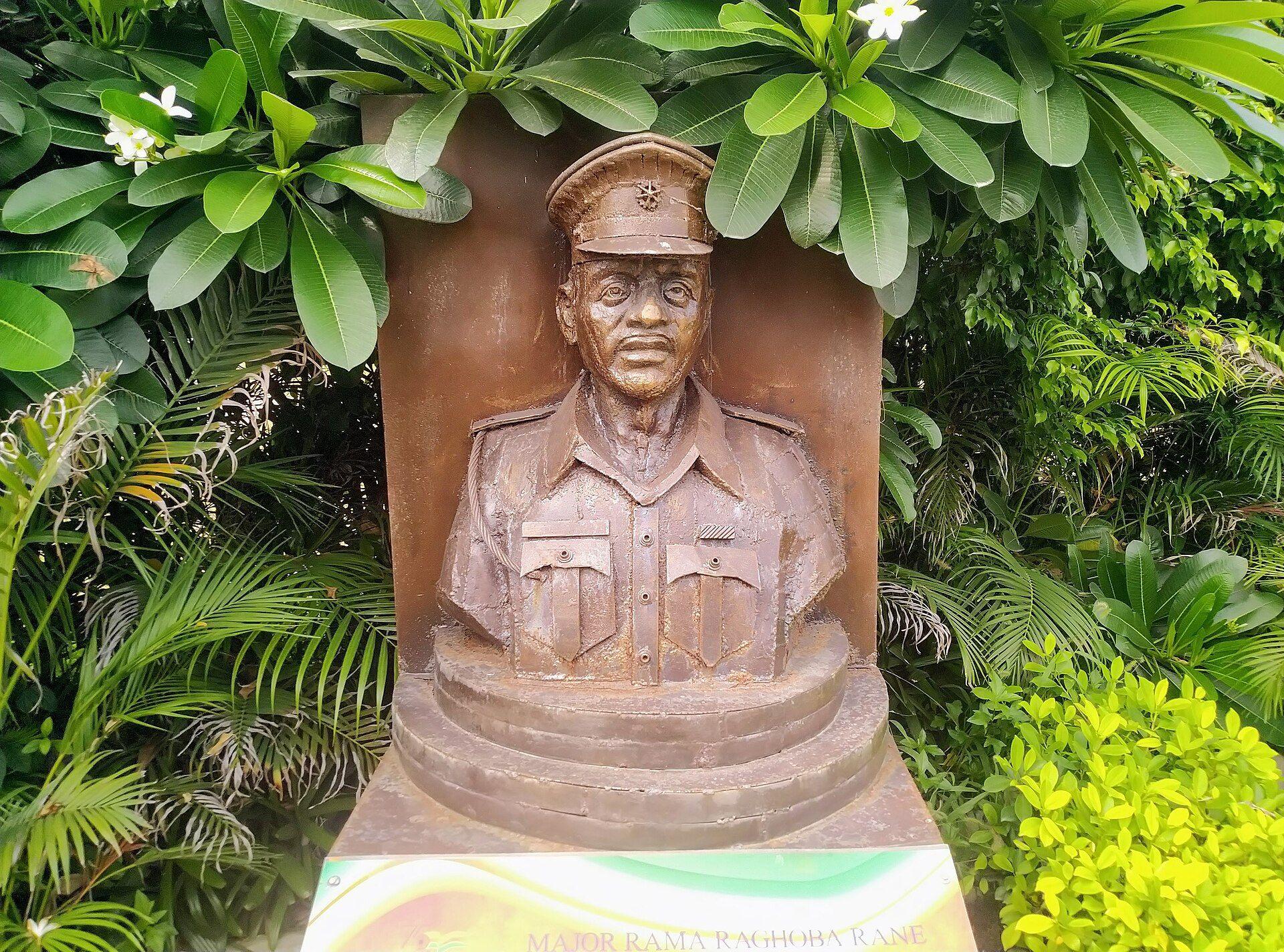
Second Lieutenant Rama Raghoba Rane cleared mines and roadblocks under fire on the Naushera-Rajouri road from 8 to 11 April 1948.
Vetnet Editorial
5 min read
At a glance
- Award
- Param Vir Chakra, gazetted 21 June 1950
- Unit
- Bombay Engineers
- Dates of action
- 8 to 11 April 1948
- Place
- Naushera–Rajouri road, Nadpur South to Chingas
- Born
- 26 June 1918, Chendia, Karwar district
- Last rank
- Major
- Commissioned
- 15 December 1947 (short-service commission)
- Died
- 11 July 1994
Mile 26, Naushera-Rajouri road
Mortar fire reached the clearing party near Nadpur South at 1100 hours on 8 April 1948, before work had begun. Two men were killed and five wounded, among them the officer in charge, Second Lieutenant Rama Raghoba Rane of the Bombay Engineers.
Rane reorganised the party and started work. After Barwali Ridge was captured at about 1630 hours, he took the party forward to build a diversion for the tanks, and worked until 2200 hours under machine-gun fire.
Roadblocks to Chingas
On 9 April, riding in the leading carrier, he stopped repeatedly to blast pine-tree blocks from the road. At 1815 hours the column met five large pine trees surrounded by mines and covered by machine guns, and the column commander moved into a harbour area for the night.
Rane was back at that block at 0445 hours on 10 April and cleared it by 0630. The next thousand yards of road were clear by 1030. The tanks reached Chingas by 1400 hours, leaving the road for the bed of the Tawi.
He kept working for the administrative column until 2100 hours, and on 11 April opened the road to Chingas by 1100 hours.
Rane was born on 26 June 1918 in Chendia village, Karwar district, Karnataka. He later reached the rank of Major.
From sapper to officer
Rane enlisted in the Bombay Engineer Regiment on 10 July 1940, at the age of 22, and passed out as the best recruit. He served in Burma with the 28th Field Company of the 26th Indian Infantry Division. When the division withdrew after the Arakan campaign, he and his two sections were left behind at Buthidaung to destroy key installations. The planned pickup did not come, and they made their way back across a river patrolled by the Japanese to rejoin the division. He was promoted havildar.
By 1947 he was a jemadar. He was selected for a short-service commission and commissioned into the Corps of Engineers as a second lieutenant on 15 December 1947. In April 1948 he was with the 37th Assault Field Company, attached to the 4th Battalion, the Dogra Regiment, for the advance from Naushera to Rajouri. The armoured column reached Rajouri on 12 April.
Besides the Param Vir Chakra, he was mentioned in despatches five times and received a commendation from the Chief of the Army Staff. He retired on 25 June 1968 and died on 11 July 1994. The Shipping Corporation of India named a crude oil tanker after him, and in January 2023 one of the 21 Andaman and Nicobar islands named after the Param Vir Chakra awardees was given his name.
The citation
On 8 April 1948, Second Lieutenant Rama Raghoba Rane, Bombay Engineers, was ordered to be in charge of the mine and roadblock clearing party at Mile 26 on the Naushera-Rajouri road which passes through very hilly country.
At 1100 Hours, on that date near Nadpur South, just as Second Lieutenant Rane and his party were waiting near the tanks to start the work of clearing the mines ahead, the enemy started heavy mortaring of the area, with the result that two men of the mine-clearing party were killed and five others including Second Lieutenant Rane were wounded. The officer at once reorganized his party and started work for the tanks to go on to their position. Throughout the day he was near the tanks under heavy enemy machine-gun and mortar fire.
After the capture of Barwali Ridge at about 1630 hours, although knowing that the enemy had not been completely cleared of the area, Second Lieutenant Rane took his party ahead and started making a diversion for the tanks to proceed. He worked on till 2200 hours that night in full view of the enemy and under heavy machine-gun fire.
On 9 April he again started work at 0600 hours and worked on till 1500hrs when the diversion was ready for the tanks to proceed. As the armoured column advanced, he got into the leading carrier and proceeded ahead. After proceeding about half a mile he came across a roadblock made of pine trees. He at once dismounted and blasted the trees away. The advance continued. Another 300 yards and the same story was repeated. By this time it was getting on to 1700 hours. The road was curving round the hill like a snake. The next roadblock was a demolished culvert. Second Lieutenant Rane again got on with the job. Before he could start work, the enemy opened up with their machine-guns, but with super courage and leadership he made a diversion and the column proceeded ahead. The roadblocks were becoming numerous but he blasted his way through. It was now 1815 hours, and light was fading fast. The carrier came across a formidable roadblock of five big pine trees surrounded by mines and covered by machine-gun fire. He started removing the mines and was determined to clear the roadblock but the armoured column commander appreciating the situation got the column into a harbour area.
On 10 April 1948 at 0445 hours, Second Lieutenant Rane again started work on the roadblock in spite of machine-gun fire with the support of one troops of tanks. With sheer will power he cleared this roadblock by 0630hours. The next thousand yards was a mass of roadblocks and blasted embankments. That was not all. The enemy had the whole area covered with machine-gun fire but with superhuman efforts, in spite of having been wounded, with cool courage and exemplary leadership and complete disregard for personal life, he cleared the road by 1030 hours.
The armoured column proceeded ahead and got off the road into the riverbed of the Tawi but Second Lieutenant Rane continued clearing the road for the administrative column. The tanks reached Chingas by 1400 hours. Second Lieutenant Rane appreciating that the opening of the road was most vital, continued working without rest or food till 2100 hours that night.
On 11 April 1948, he again started work at 0600 hours and opened the road to Chingas by 1100 hours. He worked on that night till 2200 hours clearing the road ahead.
Source: Ministry of Defence gallantry awards record. Reproduced as printed, including any errors in the original.
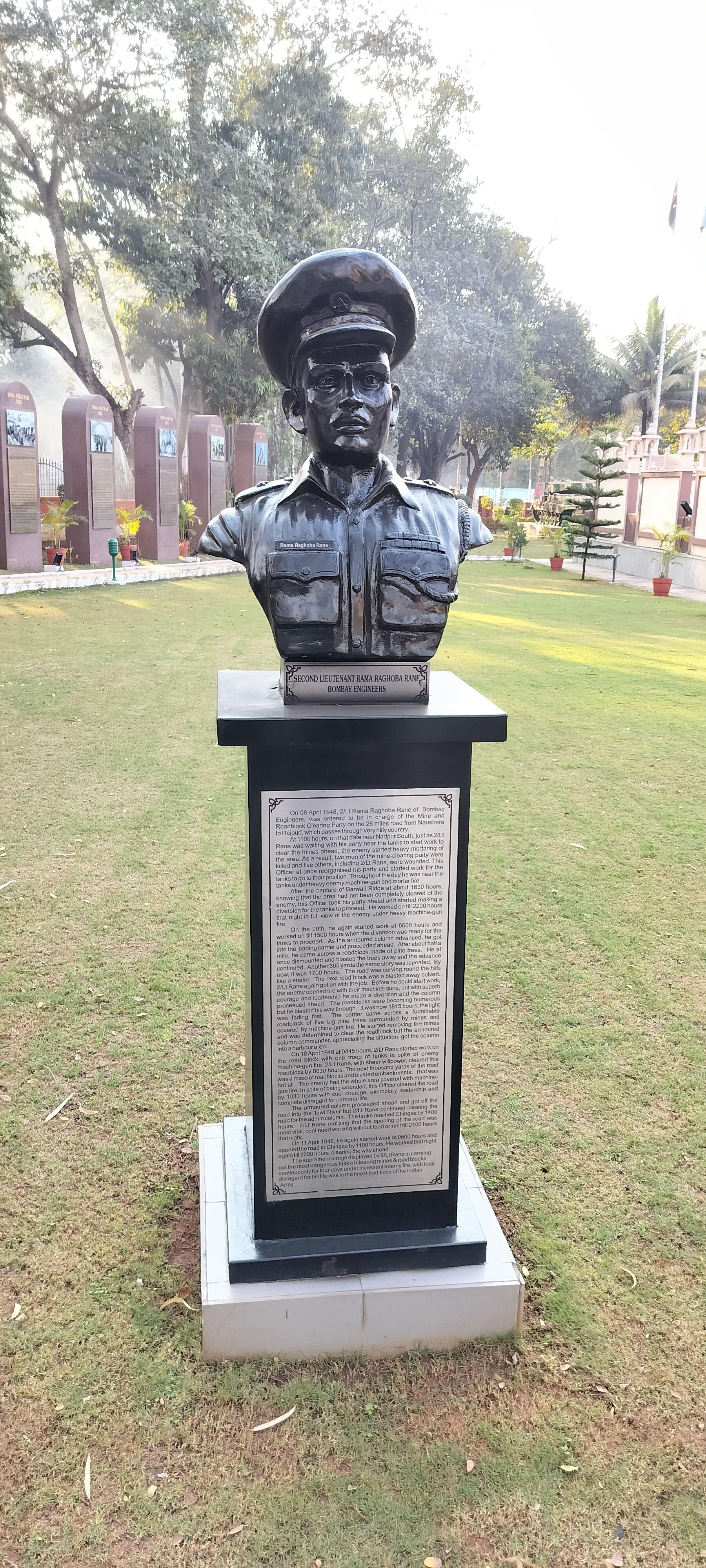
Cover image: Krishna Chaitanya Velaga (KCVelaga), own work, CC BY-SA 4.0, via Wikimedia Commons. Resized for this page. https://commons.wikimedia.org/wiki/File:Second_Lieutenant_R_R_Rane_statue_at_Param_Yodha_Sthal_Delhi.jpg
- Indian Army
- Param Vir Chakra
- Bombay Engineers
Sources
- Gazette of India Extraordinary, No. 43, 21 June 1950 (Notification No. 5-Pres.) · Gazette of India
- Param Vir Chakra winners since 1950 · The Times of India
- Major Rama Raghoba Rane PVC · Honourpoint
- Maj Rama Raghoba Rane, PVC · Aviation & Defence Universe
- PM to participate in programme to name 21 largest unnamed islands of Andaman & Nicobar Islands after 21 Param Vir Chakra awardees · Press Information Bureau