The Meghna Heli Bridge, 1971
In December 1971, IAF Mi-4 helicopters lifted IV Corps troops across the Meghna after the Ashuganj bridge was blown, opening a route to Dacca.
Vetnet Editorial
3 min read
At a glance
- Dates
- 9 to 15 December 1971
- Formation
- IV Corps, Lt Gen Sagat Singh
- Air commander
- Gp Capt Chandan Singh (Maha Vir Chakra)
- Helicopters
- Mi-4s of 110, 105 and 111 Helicopter Units
- First lift, 9 December
- 27 sorties, 309 troops and 2,200 kg, Brahmanbaria to Raipura
- First battalion across
- 4 Guards
A blown bridge at Ashuganj
On the morning of 9 December 1971, Lieutenant General Sagat Singh, commanding IV Corps, flew in an Alouette to choose a landing area near Raipura. On the way back the helicopter was hit by ground fire between Ashuganj and Brahmanbaria. The captain was wounded, the co-pilot took over, and a pilot on board later counted 38 bullet holes.
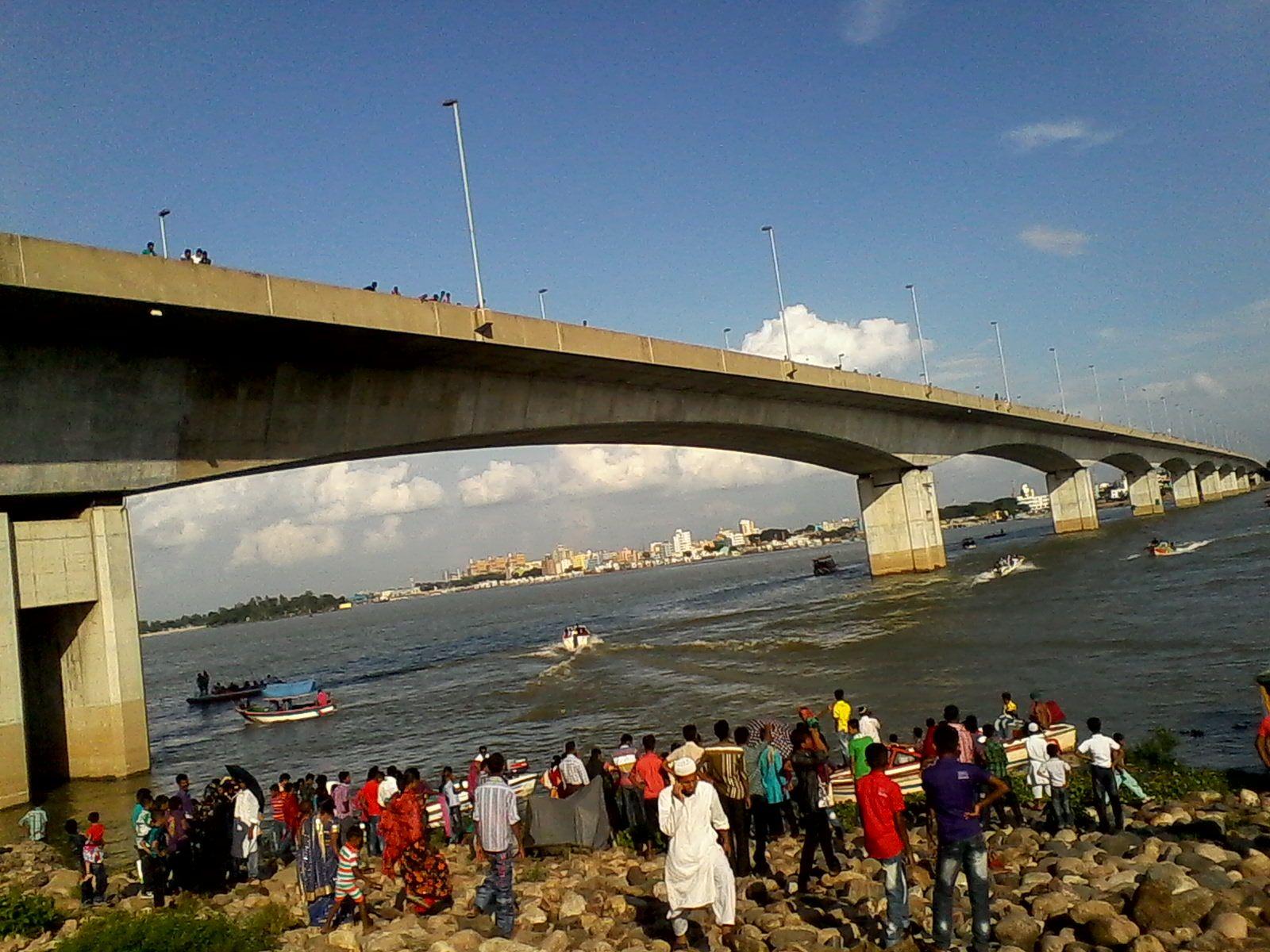
The reason for the flight was the Meghna. The river could not be forded, Dacca lay beyond it, and Pakistani troops held Ashuganj, where they blew the bridge. Sagat Singh conferred with his air commander, Group Captain Chandan Singh, and ordered a battalion flown across. It was 4 Guards. A 4 Guards officer's first-hand account on Bharat Rakshak records that Chandan Singh flew in the first helicopter of the first sortie, with the battalion's commanding officer, Colonel Himmeth Singh.
Group Captain Chandan Singh
Chandan Singh was commissioned as a fighter pilot, and a serious accident in a Spitfire during an emergency landing in 1949 almost ended his flying career. He went on to fly the Dakota, the C-119 Packet and the An-12. On the first day of the 1962 conflict with China, as a squadron leader, he led air-dropping missions over Ladakh and came back with 19 bullet holes in his aircraft; he then flew tanks in to Chushul. He received the Vir Chakra for his part in that war.
In 1971 he was Station Commander at Jorhat, and Air Chief Marshal Lal entrusted him with setting up Kilo Flight, the forerunner of the Bangladesh Air Force, with a Dakota, an Otter and Alouette helicopters. At his suggestion Kailashahar, on the Tripura border, became the aviation hub of IV Corps.
On the morning of 7 December he flew to Sylhet himself to check Army intelligence reports that the Pakistan Army there wanted to surrender. His Mi-4 was hit several times by machine-gun fire, and he reported back to Sagat Singh that it was a trap. 110 HU then landed 4/5 Gorkha Rifles under fire near Sylhet. 4 Guards, at the Meghna, was the second unit to go in by helicopter. He was the seniormost IAF officer to be awarded the Maha Vir Chakra in the 1971 war.
Sorties from the diaries
Later on 9 December, ten Mi-4s of 110 and 105 Helicopter Units flew 27 sorties from Brahmanbaria to Raipura, carrying 309 troops and 2,200 kg. Overnight, eight helicopters lifted 347 more troops and 6,000 kg, landing in darkness on two sites about a kilometre apart. Squadron Leader C.S. Sandhu commanded 110 HU.
Two helicopters of 111 HU joined on 11 December, when the lift moved to Narsingdi. The task that day came to 99 sorties, 815 troops and 65,200 kg. On 14 and 15 December the helicopters crossed the river again, from Daudkandi to Baidya Bazar.
Two Mi-4s were lost to in-flight failures on the way to Kumbhigram, Z613 to an engine fire and Z640 to a transmission failure. Both crews escaped.
Totals that do not match
The published figures differ. Chandan Singh's Maha Vir Chakra citation gives nearly 3,000 troops and 40 tons for the crossing operations. Sqn Ldr Pushp Vaid's tally for all four heliborne operations of 7 to 15 December gives 5,913 troops, and he notes that he is unsure of the exact figures. His article elsewhere says over 6,000 soldiers and more than 202 tons. Daily diary totals on the same site are lower for some sectors.
Sandhu and Vaid received the Vir Chakra. On 16 December five Mi-4s flew dignitaries and correspondents to Dacca for the surrender ceremony.
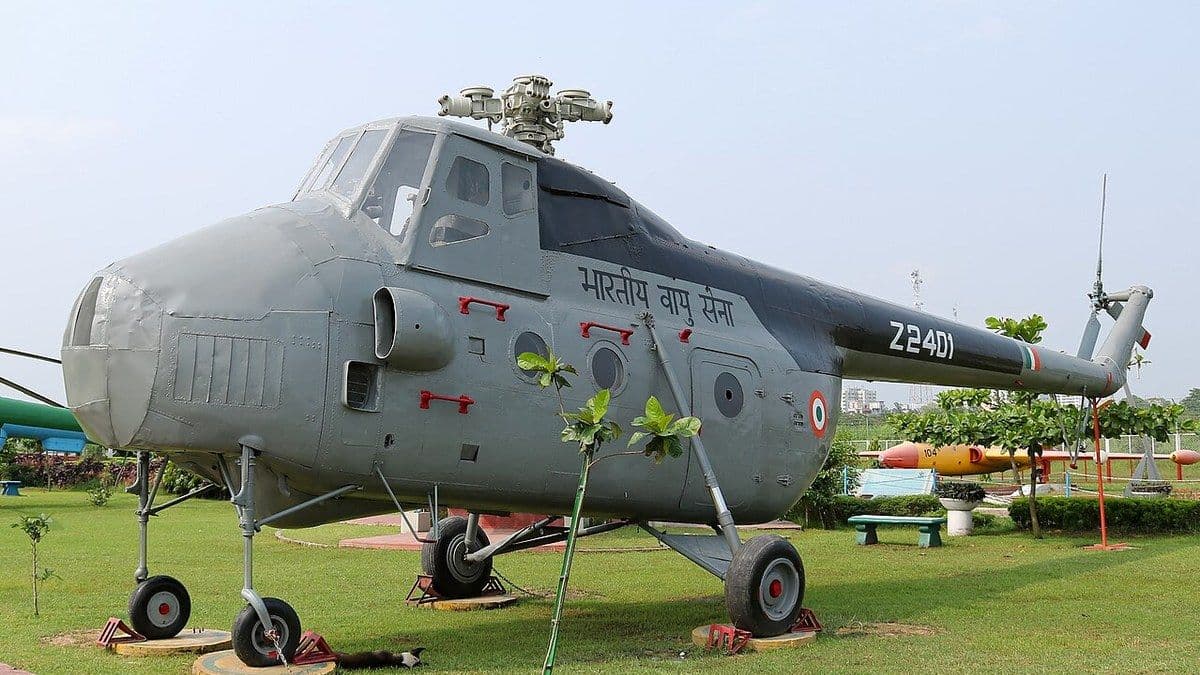
Cover image: Shadman Samee from Dhaka, Bangladesh, CC BY-SA 2.0, via Wikimedia Commons. Resized for this page. https://commons.wikimedia.org/wiki/File:Z2401_India_Air_Force_Mil_Mi-4_Hound._(40492453450).jpg
- Indian Air Force
- 1971 war
Sources
- Special Heli Borne Ops: Sylhet and Meghna · Bharat Rakshak
- Special Heli Borne Ops: East Pakistan (part 4) · Bharat Rakshak
- The Meghna Crossing · Bharat Rakshak
- Service record: Squadron Leader Pushp Kumar Vaid · Bharat Rakshak
- Brilliant, unconventional, fearless: Group Captain Chandan Singh, seniormost IAF officer to be awarded MVC · The Tribune