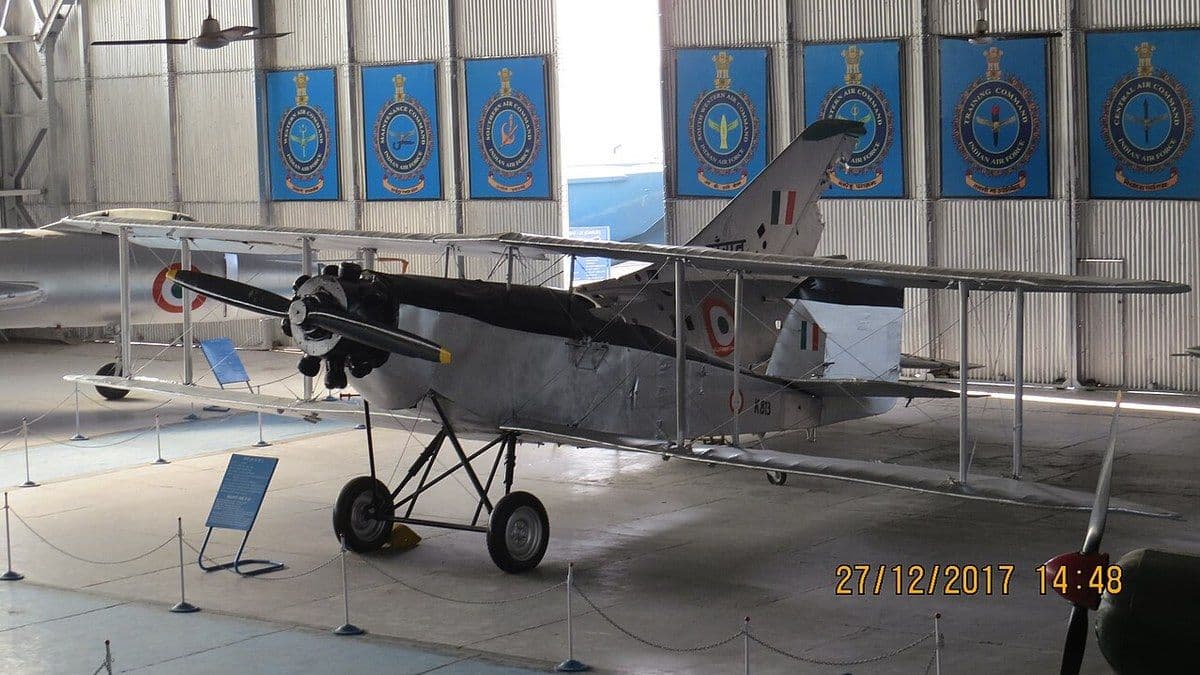
The Indian Air Force dates from an Act of 8 October 1932 and is run from Air Headquarters in New Delhi through seven commands.
Four Wapitis at Drigh Road
No. 1 Squadron of the Indian Air Force came into being on 1 April 1933 at Drigh Road, Karachi. It had four Westland Wapiti biplanes, which formed its 'A' Flight, five pilots commanded by a Royal Air Force officer, and the first batch of Hawai Sepoys.
The service itself is older by six months. Its legal starting point is 8 October 1932, the date of the Indian Air Force Act. For more than four decades the anniversary was kept on 1 April, the day the first squadron formed. In 1976 Air Force Day moved to 8 October.
The first Indian officers trained at RAF Cranwell. Among them was Subroto Mukerjee, who would later lead the service.
From Miranshah to Burma
After about three years of training the squadron went to the North West Frontier Province, where it flew from Miranshah in support of the RAF and the Army against frontier tribesmen. It flew in the army cooperation role, and forced landings under tribal fire were part of the work.
The Second World War changed the scale. Once Japan entered the war, the force grew from one squadron to ten, and 3,000 officers and 25,000 men were trained between 1942 and 1945. Its squadrons saw action against the Japanese in Burma, flying aircraft the RAF had passed on. Indian pilots ended the war with one DSO and 23 DFCs.
King George VI conferred the prefix 'Royal' in 1945. It was dropped on 26 January 1950, when India became a republic. On 1 April 1954 Air Marshal Mukerjee took over as the first Indian Chief of Air Staff.
Air Headquarters and seven commands
Air Headquarters in New Delhi is headed by the Chief of the Air Staff. It controls the administrative functions of the service and exercises control over the commands.
There are seven. Five are operational, each under an Air Officer Commanding-in-Chief of the rank of Air Marshal: Western, Eastern, Central, South Western and Southern. Two are functional, Training Command and Maintenance Command, and they exist to keep a uniform standard in those fields. Air bases, squadrons and helicopter units are held under these commands.
One of the type, K-813, is on display at the Indian Air Force Museum at Palam.
Cover image: Aryan Gupta, CC BY-SA 4.0, via Wikimedia Commons. Resized for this page. https://commons.wikimedia.org/wiki/File:Westland_Wapiti_Delhi_Air_Museum.jpg