Lieutenant Manoj Kumar Pandey, Param Vir Chakra
Lieutenant Manoj Kumar Pandey of 1/11 Gorkha Rifles cleared four enemy positions before Khalubar on the night of 2/3 July 1999 and was killed.
Vetnet Editorial
5 min read
At a glance
- Award
- Param Vir Chakra (posthumous)
- Unit
- 1/11 Gorkha Rifles
- Service number
- IC-56959
- Date of action
- 2/3 July 1999, Khalubar, Batalik sector
- Born
- 25 June 1975, Rudha village, Sitapur district
- School
- UP Sainik School, Lucknow (now named after him)
- Commissioned
- 7 June 1997, from the Indian Military Academy (90th NDA course)
- Formation
- 70 Infantry Brigade, 3 Infantry Division
Four positions below Khalubar
On the night of 2/3 July 1999, 1/11 Gorkha Rifles was advancing on Khalubar in the Batalik sector when fire from the surrounding heights came down on its Number 5 Platoon. The platoon commander, Lieutenant Manoj Kumar Pandey, was told to clear those positions before daylight caught the battalion exposed.
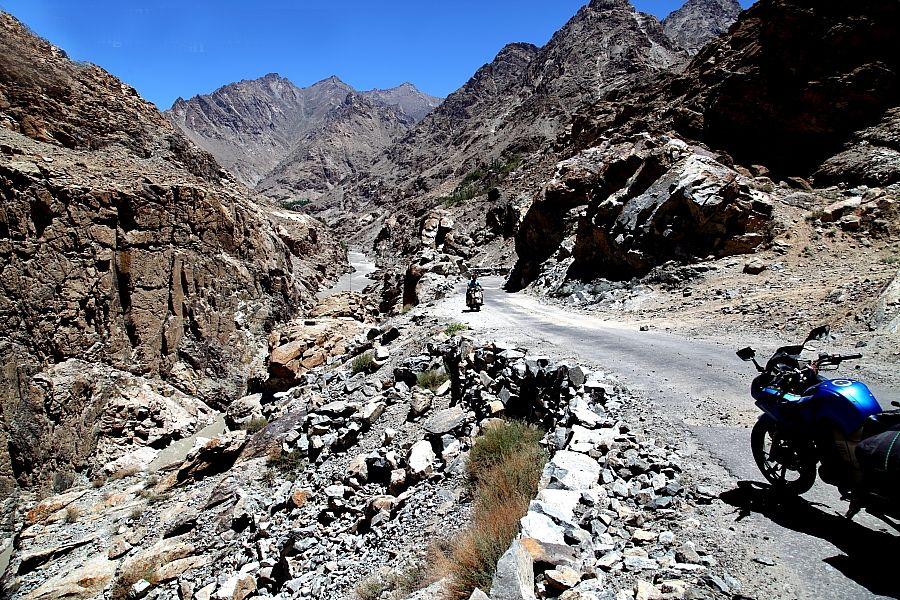
He moved the platoon to better ground and sent one section to the right. He took the four positions on the left himself.
At the first he killed two enemy soldiers. At the second he killed two more. At the third he was hit in the shoulder and legs. He kept going and led the assault on the fourth, urging his men on and destroying it with a grenade as a medium machine gun burst killed him.
The citation credits this action with giving the companies the firm base from which Khalubar was captured.
The Khalubar ridge
1/11 Gorkha Rifles fought in the Batalik sector under 70 Infantry Brigade, part of 3 Infantry Division. There, 12 JAK LI, 10 Para (Special Forces) and a company of the Ladakh Scouts first opened a corridor to the Line of Control through the Junk Lungpa, by 3 June 1999. The enemy's main defences lay on the Khalubar-Padma Go ridgeline: Point 4812, Khalubar, Point 5287, Point 5000 and Stangba. 1/11 Gorkha Rifles and 22 Grenadiers were given Khalubar and the Point 5287 complex, and within the battalion the task went to B Company, in which Pandey commanded Number 5 Platoon.
His commanding officer, Colonel Lalit Rai, described the approach to Rediff in January 2000. The column marched for 14 hours and was about 400 metres short of its objective when heavy fire came from above and from the side. With barely sixty men, he took about thirty against the position on top and sent the rest with Pandey to deal with the fire from the left. He had expected two bunkers there; there were six sangars. His soldiers told him that Pandey took four for himself and gave two to another officer. Colonel Rai, who was wounded in the legs, said they then held on for three days without food or water before reinforcements could be moved in.
Honourpoint records that Pandey's troops took six bunkers, killed eleven enemy soldiers and captured arms and ammunition including an air defence gun. Six other men of 1/11 Gorkha Rifles were killed in the operation: Havildars Jhanak Bahadur Rai, B.B. Dewan and Ganga Ram Rai, and Riflemen Karna Bahadur Limbu, Kalu Ram Rai and Arun Kumar Rai.
From Sitapur to 1/11 Gorkha Rifles
He was born on 25 June 1975 and was a native of Rudha village in Sitapur district. He attended Sainik School, Lucknow, then the National Defence Academy and the Indian Military Academy. The citation names him as a Lieutenant, while the awards portal and PIB use Captain.
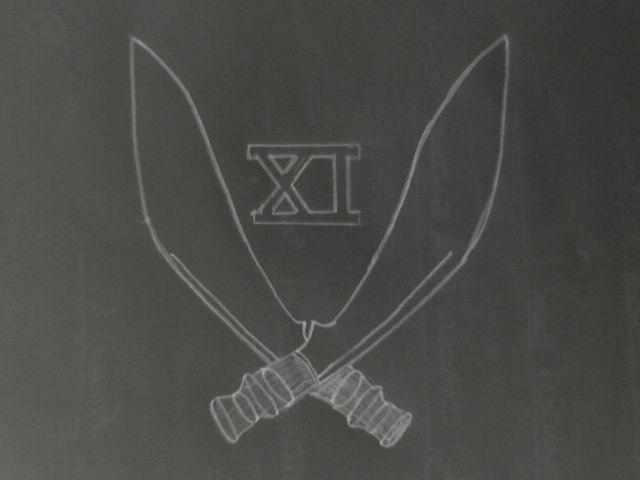
His old school now carries the name Manoj Kumar Pandey UP Sainik School, Lucknow.
Commission, and how he is remembered
Pandey was in the 90th course of the National Defence Academy, passing out in 1996, and was commissioned from the Indian Military Academy on 7 June 1997. His first posting was in the Kashmir valley, followed by Siachen, from where the battalion was moved to Batalik. His father, Gopi Chand Pandey, told Rediff in January 2000 that when his son was asked at selection why he wanted to join the Army, he replied that he wanted to get the Param Vir Chakra.
UP Sainik School, Lucknow, has named its main gate and assembly hall after him and holds an annual inter-school football tournament in his memory. The Army Welfare Housing Organisation named its colony at Indirapuram, Ghaziabad, Manoj Vihar. Army quarters near the Cardio Thoracic Centre in Pune are called Capt Manoj Pandey Enclave, a block at the Services Selection Centre, Allahabad, carries his name, and roundabouts in Sitapur and in Gomti Nagar, Lucknow, are named Captain Manoj Pandey Chowk. In the film LOC, about the Kargil war, he was played by Ajay Devgn.
The citation
LIEUTENANT MANOJ KUMAR PANDEY (IC-56959), 1/11 GORKHA RIFLES. (POSTHUMOUS) (Effective date of the Award : 02nd July, 1999)
Lieutenant Manoj Kumar Pandey, a young officer of the 1/11 Gorkha Rifles, took part in a series of boldly led attacks during Operation VIJAY, forcing back the intruders with heavy losses in Batalik, including the capture of Jaubar Top.
His finest hour was during the advance to Khalubar, when he was Number 5 Platoon Commander. On the night of 02/03 July 1999, as the platoon approached its final objective, it came under heavy and intense enemy fire from the surrounding heights. The officer was tasked to clear the interfering enemy positions, so as to prevent his battalion from getting daylighted, being in a vulnerable position. The officer quickly moved his platoon to an advantageous position under intense enemy fire and sent one section to clear the enemy positions from the right, while he himself proceeded to clear four other enemy positions on the left. Fearlessly assaulting the first enemy position, he killed two enemy personnel and proceeded to assault the second and destroyed it by killing two more enemy personnel. Lieutenant Manoj Kumar Pandey was injured on the shoulder and legs by enemy fire while clearing the third position. Undaunted and without caring for his grievous injury, he led the assault on the fourth position urging his men and destroyed the same with a grenade, even as he got a fatal Medium Machine Gun burst on his forehead. It is this singular dare devil act of the officer, which provided the critical firm base for the companies, which finally led to capture of Khalubar.
Lieutenant Manoj Kumar Pandey, thus showed most conspicuous bravery, indomitable courage, exemplary personal valour, outstanding leadership and devotion to duty of an exceptionally high order, in the face of enemy and made the supreme sacrifice in the highest traditions of the Army.
Source: Ministry of Defence gallantry awards record. Reproduced as printed, including any errors in the original.
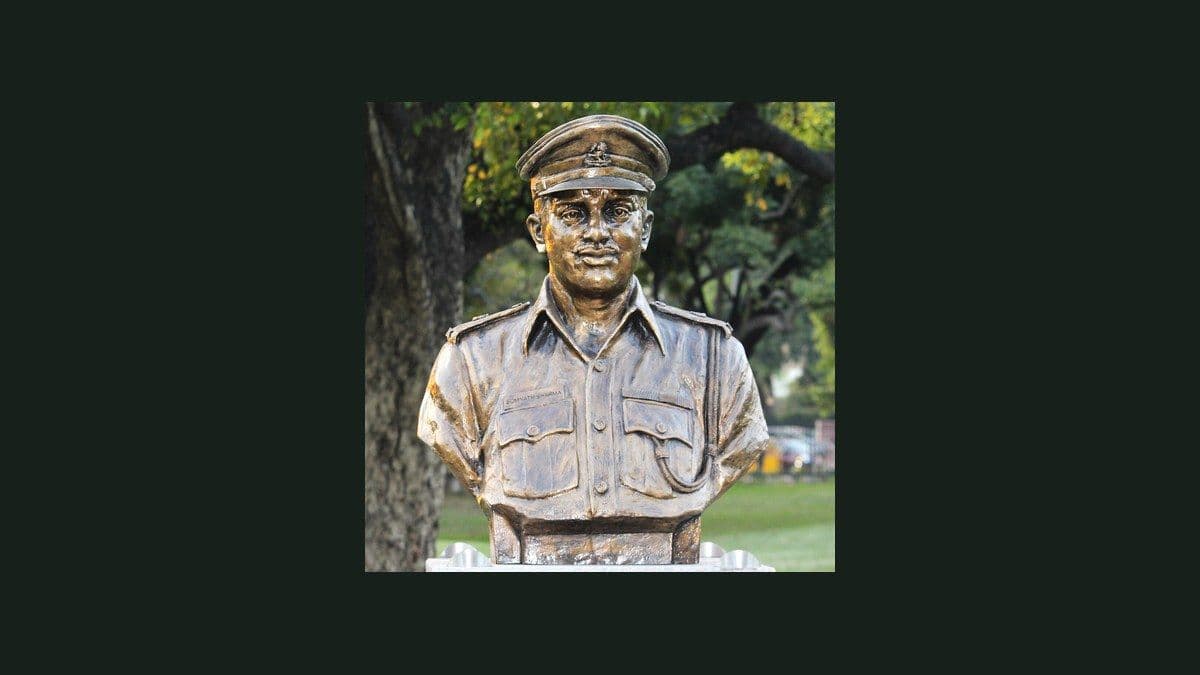
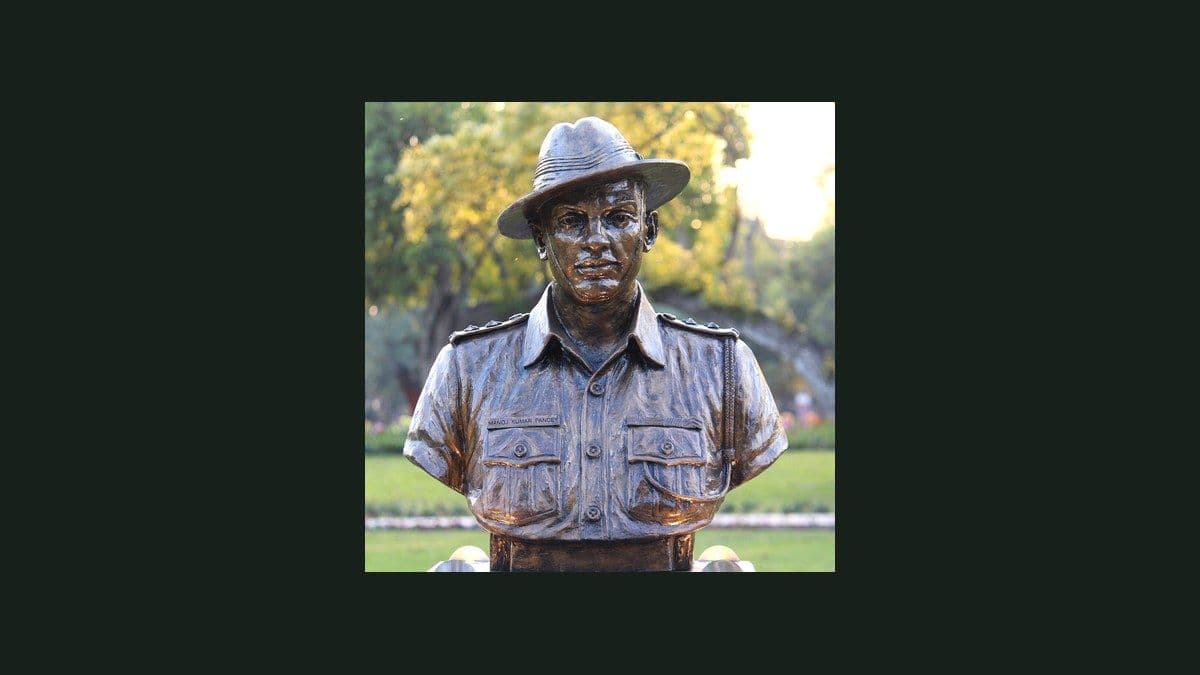
Cover image: Krishna Chaitanya Velaga, CC BY-SA 4.0, via Wikimedia Commons. Resized for this page. https://commons.wikimedia.org/wiki/File:Lieutenant_M_K_Pandey_statue_at_Param_Yodha_Sthal_Delhi.jpg
- Indian Army
- Param Vir Chakra
- 1/11 Gorkha Rifles
Sources
- Captain Manoj Kumar Pandey, PVC · Honourpoint
- 'Before he fell he told his men: Don't leave them' (Republic Day special on Captain Manoj Pandey) · Rediff.com
- Saga of valour, sacrifice (Kargil heroes) · The Tribune
- U.P. Sainik Schools Society: Captain Manoj Kumar Pandey UP Sainik School, Lucknow · U.P. Sainik Schools Society