The Battle of Zoji La, November 1948
On 1 November 1948 Stuart tanks of 7 Cavalry forced the Zoji La, reaching the Gumri plains by afternoon after two infantry attacks had failed.
Vetnet Editorial
4 min read
At a glance
- Date of attack
- 1 November 1948
- Place
- Zoji La, on the Srinagar-Leh route
- Armour
- Stuart light tanks of 7 Cavalry (now 7 Light Cavalry)
- Formation
- 77 Para Brigade (Brig KL Atal)
- Tank track from Baltal ready
- 15 October 1948
- Link-up at Kargil
- 23 or 24 November 1948
- Leading squadron
- C Squadron, 7 Cavalry, under Capt Sharak Dev Singh Jamwal
- First Dakota landing at Leh
- 24 May 1948, Air Cdre Mehar Singh
Two failed attacks on the pass in September 1948
At 10.30 on the morning of 1 November 1948, under heavy cloud and light snow, Indian guns opened on the Zoji La. Tanks of 7 Cavalry, now 7 Light Cavalry, then began to climb.
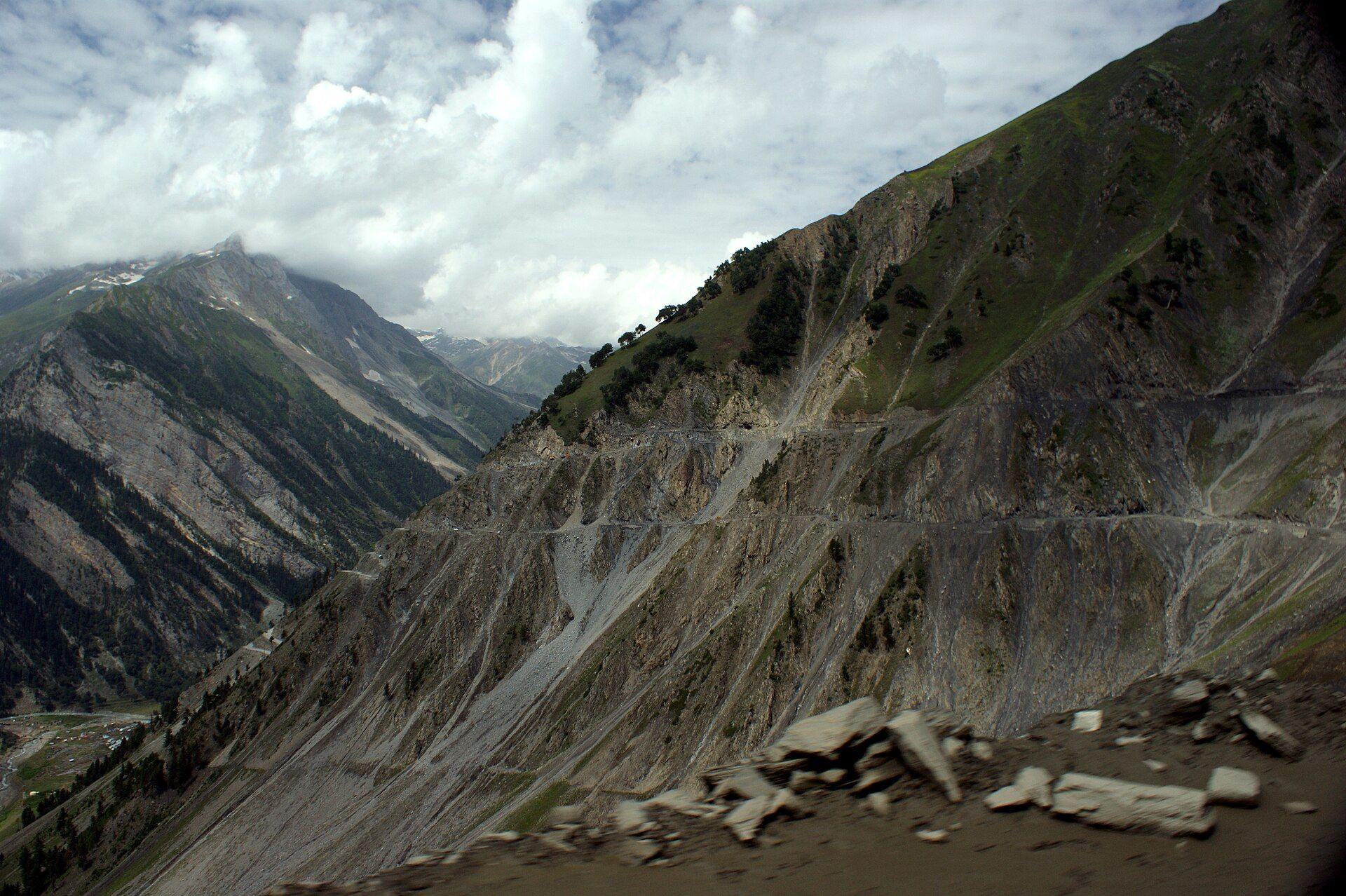
The pass was the first obstacle on the land route to Ladakh through Kargil. Enemy troops held it from prepared positions. Brig KL Atal's 77 Para Brigade had attacked on 3 September and again on 13 September, and both attempts failed.
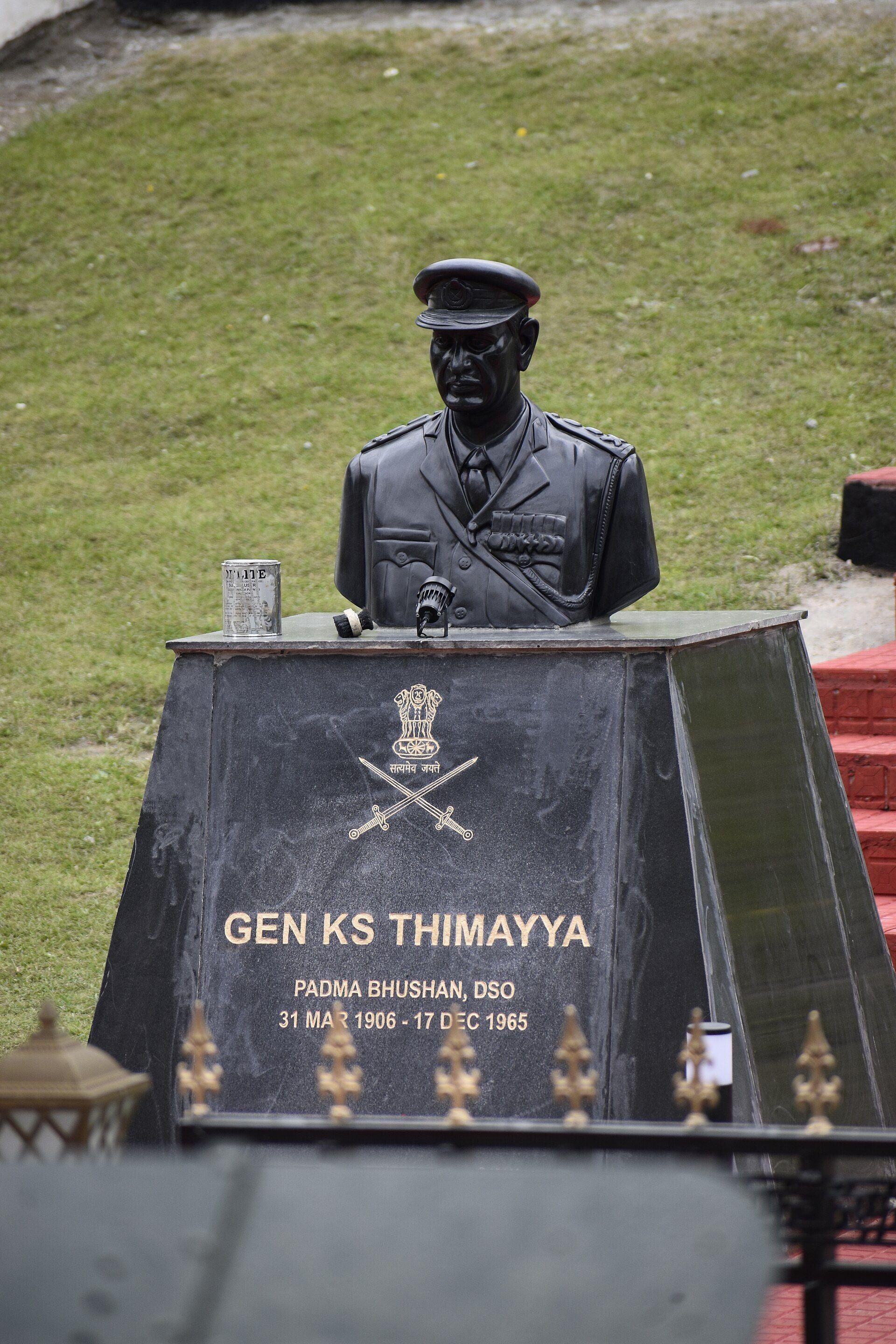
Lt Gen KM Cariappa called a conference at Srinagar on 23 September. Lt Gen SM Shrinagesh, Maj Gen KS Thimayya and Atal attended, and Lt Col Rajinder Singh, known as Sparrow, the commanding officer of 7 Cavalry, was specially invited. The meeting concluded that air and artillery could not neutralise the entrenched defenders, and it settled on tanks.
Leh, held by air and on foot
The pass mattered because of Leh. When Maj Gen KS Thimayya took command of Sri Division, now 19 Division, on 3 May 1948, he told his commanders and staff that the fall of Leh would be a strategic blow to India and that it had to be saved at all costs.
With the land route closed, Leh had to be reinforced by air and on foot. On 24 May 1948, Air Cdre Mehar Singh, with Thimayya on board, made the first Dakota landing on a 2,300-yard mud strip on the outskirts of Leh, built by hand under Sonam Norbu, a Leh-born civil engineer. The first company of 2/4 Gorkha Rifles was flown in, but bad weather then ruled out further air reinforcement for a time.
Lt Gen KM Cariappa ordered 2/8 Gorkha Rifles, at Ferozepore, to send a rifle company to Leh through Manali. D Company under Maj Hari Chand, known as the Arjun Column, went by train to Pathankot and by bus to Manali, then marched 427 km and reached Leh on 7 July 1948. By then the enemy had reached Nimu, about 35 km from Leh. The rest of the battalion followed: A Company was flown in from Srinagar, and B and C Companies left Manali on 24 August and reached Leh on 18 September.
Turrets off and a track from Baltal
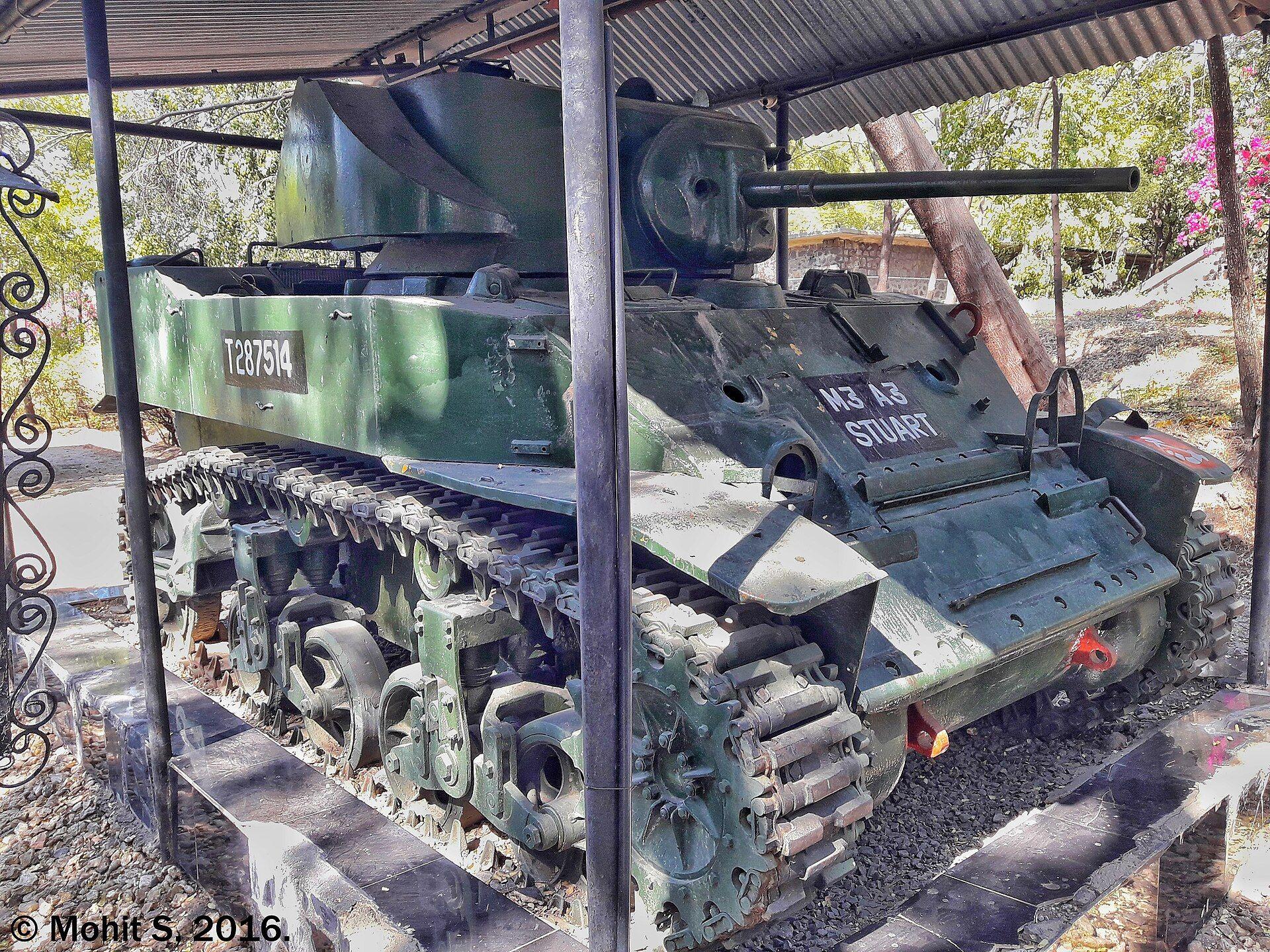
Two problems came first. Some bridges on the way could not take the weight of a Stuart light tank, so the turrets were removed and carried separately to Baltal. The dismantled loads also hid the move from enemy agents.
Above Baltal there was only a mule track. The official history, as cited in later accounts, credits two field companies of the Madras Sappers with improving it, working day and night. It was ready for tanks by 15 October.
Snow caused further delay. The attack, set for 20 October, slipped to 25 October and then to 29 October, when the slopes were still too slippery. Atal was told that if it did not start on 1 November, it would be abandoned.
Gumri by afternoon on 1 November
C Squadron, commanded by Capt SDS Jamwal, led the climb, with Thimayya riding in one of the leading tanks. The Stuarts met no anti-tank mines and none stuck in the snow.
A radio message at 3 pm reported Gumri captured and the enemy withdrawing. The infantry occupied the Mukand and Chabutra ridges, which the enemy had vacated.
The advance continued through the month. Indian troops linked up at Kargil with a force coming from Leh. Accounts give the date of that link-up as 23 or 24 November 1948.
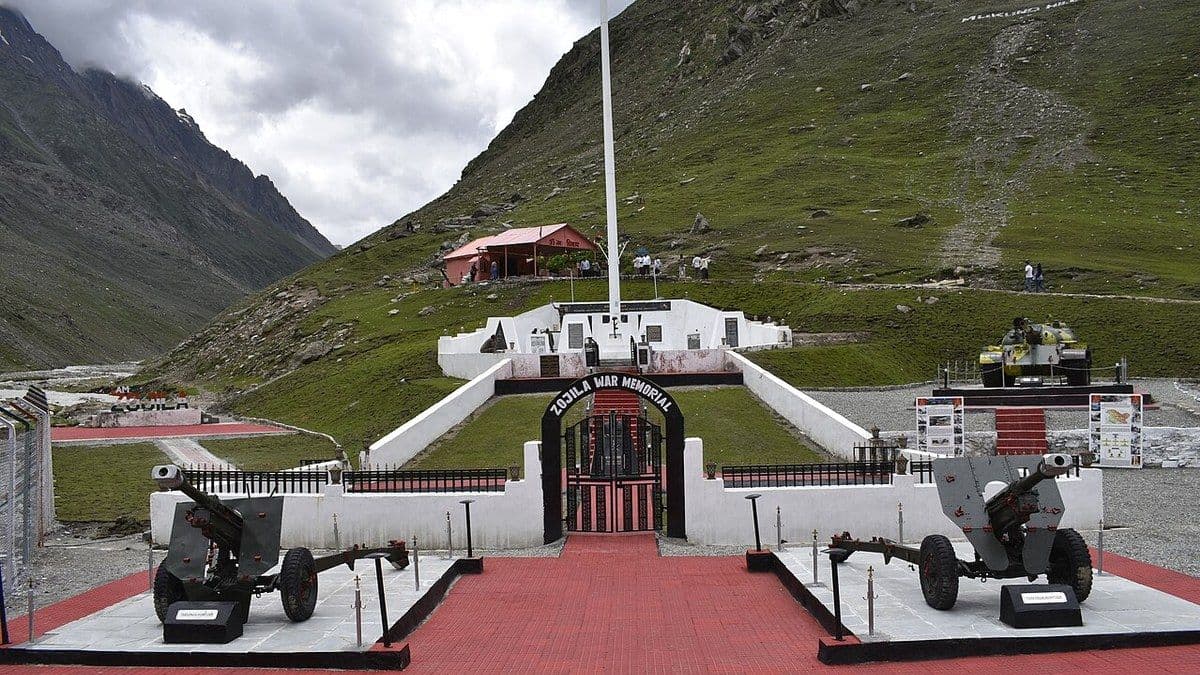
Cover image: Vishyvishal14, CC BY-SA 4.0, via Wikimedia Commons. Resized for this page. https://commons.wikimedia.org/wiki/File:Zojila_War_Memorial_Overall_Shot.jpg
The night at Gumri
Gumri basin lies about 5 km beyond the pass. That night the temperature fell to between minus 30 and minus 40°C, and the tank crews of C Squadron kept warm by burning a dry tree root beside the Gumri rest house with fuel drained from one of the tanks. On 2 November the chain of command, from Lt Gen KM Cariappa down to Brig KL Atal, came up to Gumri.
Lt Gen SM Shrinagesh, the corps commander, signalled that with the capture of Machoi the enemy defences at Zoji La had been broken and the enemy was falling back towards Kargil. He asked for his congratulations to be passed to Capt Sharak Dev Singh Jamwal, commander of C Squadron, and to its JCOs and men.
These details come from a 13-page narrative that Jamwal wrote in 1999, reproduced in the 2022 book Treachery & Gallantry: Gilgit-Skardu-Ladakh 1947-48 by Col Ajay K Raina and Brig Rajendra Singh. A filmmaker, Serbjeet Singh, had come to Srinagar with Thimayya in May 1948 and filmed the capture of Zoji La for a documentary, Liberation of Ladakh.
- Indian Army
- Battle of Zoji La
Sources
- When tanks drove on snow at Zoji La to secure Ladakh from Pakistani militia · The Tribune
- The 1948 Zoji La capture and the liberation of Ladakh · The Tribune
- Major General Rajinder Singh Sparrow, MVC: An Exceptional General Who Delivered Results Under The Most Adverse Circumstances · Salute
- Operation Bison (Jammu & Kashmir 1948) · Wikipedia