The Brigade of the Guards, Indian Army
Raised in 1949 from four senior battalions as an all-India, all-class regiment, its soldiers include Param Vir Chakra winner Albert Ekka of 14 Guards.
Vetnet Editorial
3 min read
At a glance
- Raised
- 1949
- Founder
- Field Marshal K. M. Cariappa
- Regimental centre
- Kamptee, Maharashtra
- Motto
- Pahla Hamesha Pahla
- War cry
- Garud Ka Hun Bol Pyare
- Param Vir Chakras
- 2: Naik Jadunath Singh (1948), Lance Naik Albert Ekka (1971)
- Battle honours
- Akhaura, Burki, Gadra Road, Hilli, Naushera, Gurais, Shingo River Valley, Sylhet, Ganga Sagar
- Colonel-in-Chief
- The President of India
Ganga Sagar, 3 December 1971
At about 2 am on 3 December 1971, 14 Guards attacked the Ganga Sagar complex in East Pakistan, west of Agartala. Lance Naik Albert Ekka was in Bravo Company, the left forward company.
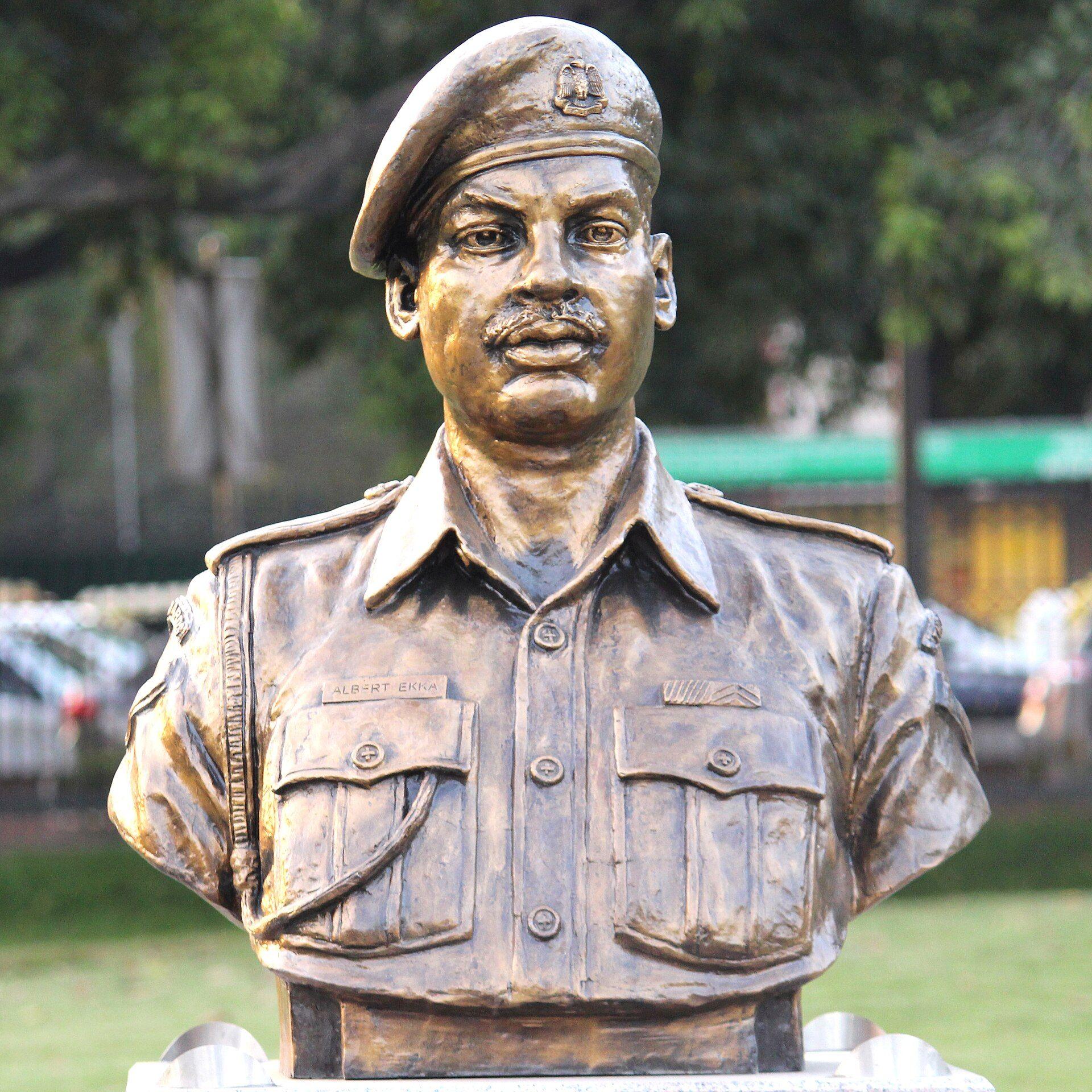
Ekka attacked a light machine gun bunker, killed its two-man crew and silenced the gun. He was seriously wounded in doing so and kept fighting. Further on, a medium machine gun firing from the upper floor of a fortified building was holding up the attack. He crawled to the building and threw a grenade through a loophole, then climbed a side wall, got into the bunker and silenced the gun. He died of his wounds after the objective fell. Ekka received the Param Vir Chakra posthumously.
In January 1968 his company of 7 Bihar was assigned to the newly raised 32 Guards at Kota, which was redesignated 14 Guards in April 1971.
Four Battalions Under Cariappa
Field Marshal K. M. Cariappa, the first Indian Commander-in-Chief, founded the regiment in 1949 on the model of British foot guards, the Coldstream Guards in particular. Recruitment was open to all regions, castes and creeds.
He built it by moving established battalions out of their old regiments. The 2nd Battalion of the Punjab Regiment became 1 Guards, and the 1st Battalions of the Grenadiers, the Rajputana Rifles and the Rajput Regiment became 2, 3 and 4 Guards. The transfers ran into the early 1950s and sources give varying dates for individual units.
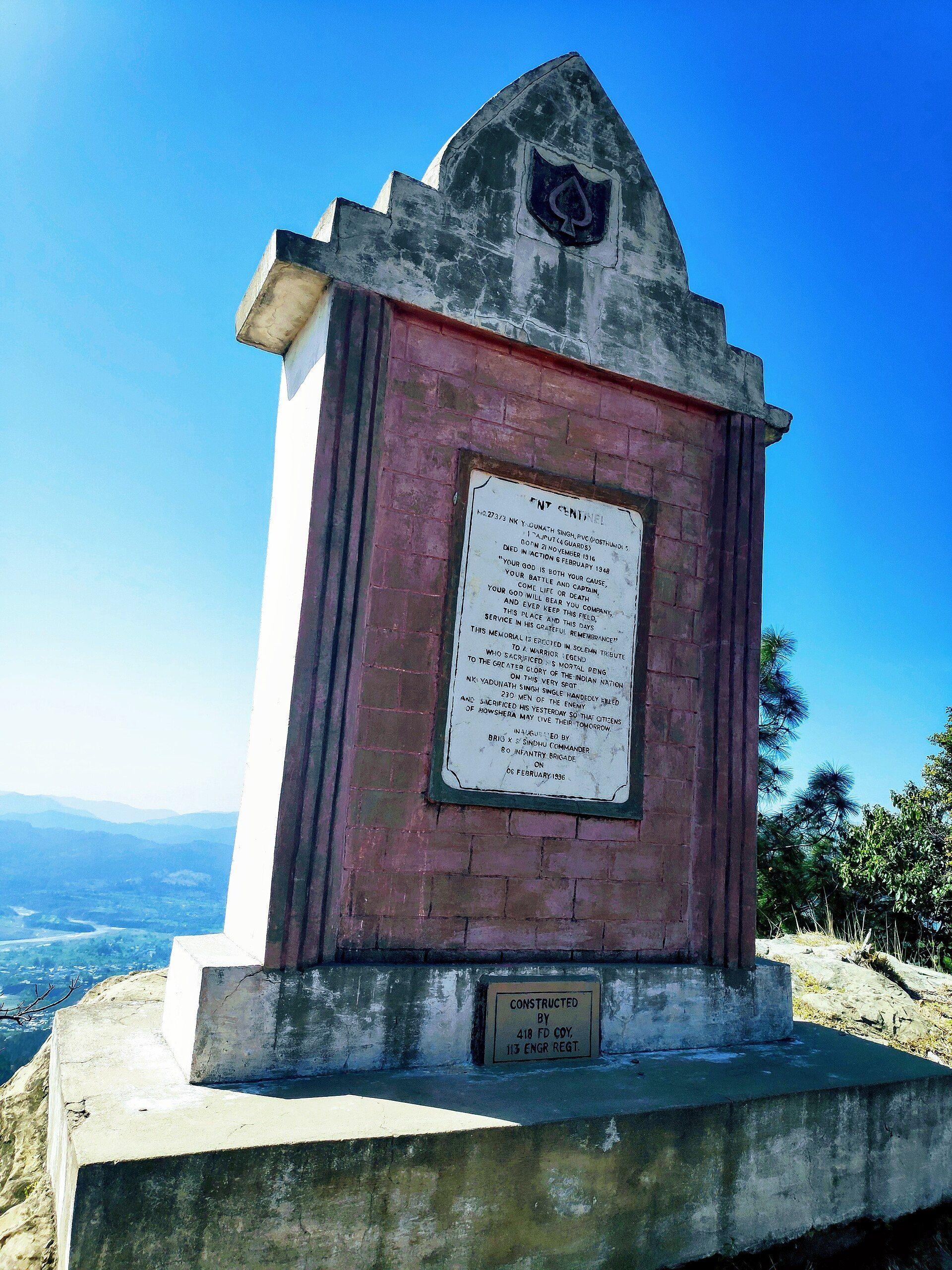
The regiment's other Param Vir Chakra came with one of those battalions. On 6 February 1948, on the Tain Dhar ridge north of Naushera, Naik Jadunath Singh of the 1st Battalion of the Rajput Regiment left his sangar when a third attack came in and charged alone with a Sten gun. The attackers withdrew. Two bullets, in the head and chest, killed him.
Blue Star and the Mechanised Role
In Operation Blue Star in June 1984, 10 Guards entered the Golden Temple complex from the north under Lt Col Israr Rahim Khan, losing 19 killed and 50 wounded. Captain Jasbir Singh Raina received the Ashoka Chakra and Khan the Kirti Chakra.
10 Guards was also first among the battalions with recorded dates to become mechanised, in 1988. Most of the regiment now serves in that role. The newest addition to the list, 24 Guards, began in 1966 at Bikaner as a camel battalion of the Grenadiers and joined the regiment in 2023.
Honours, Colours and Colonels
Bharat Rakshak's regimental profile lists five post-Independence theatre honours: Jammu and Kashmir 1947-48, Rajasthan 1965, Punjab 1965, East Pakistan 1971 and Jammu and Kashmir 1971. Its battle honours are Akhaura, Burki, Gadra Road, Hilli, Naushera, Gurais, Shingo River Valley, Sylhet and Ganga Sagar. Besides the two Param Vir Chakras, the profile records two Ashoka Chakras: Havildar Bishan Singh in 1956, and the award for Operation Blue Star in 1984.

4 Guards, the former 1st Battalion of the Rajput Regiment, carries an Honorary Colour awarded for collective gallantry, and has an extra junior commissioned officer on its establishment to carry it. Battalions of the regiment have served with United Nations forces in Gaza and in Angola.
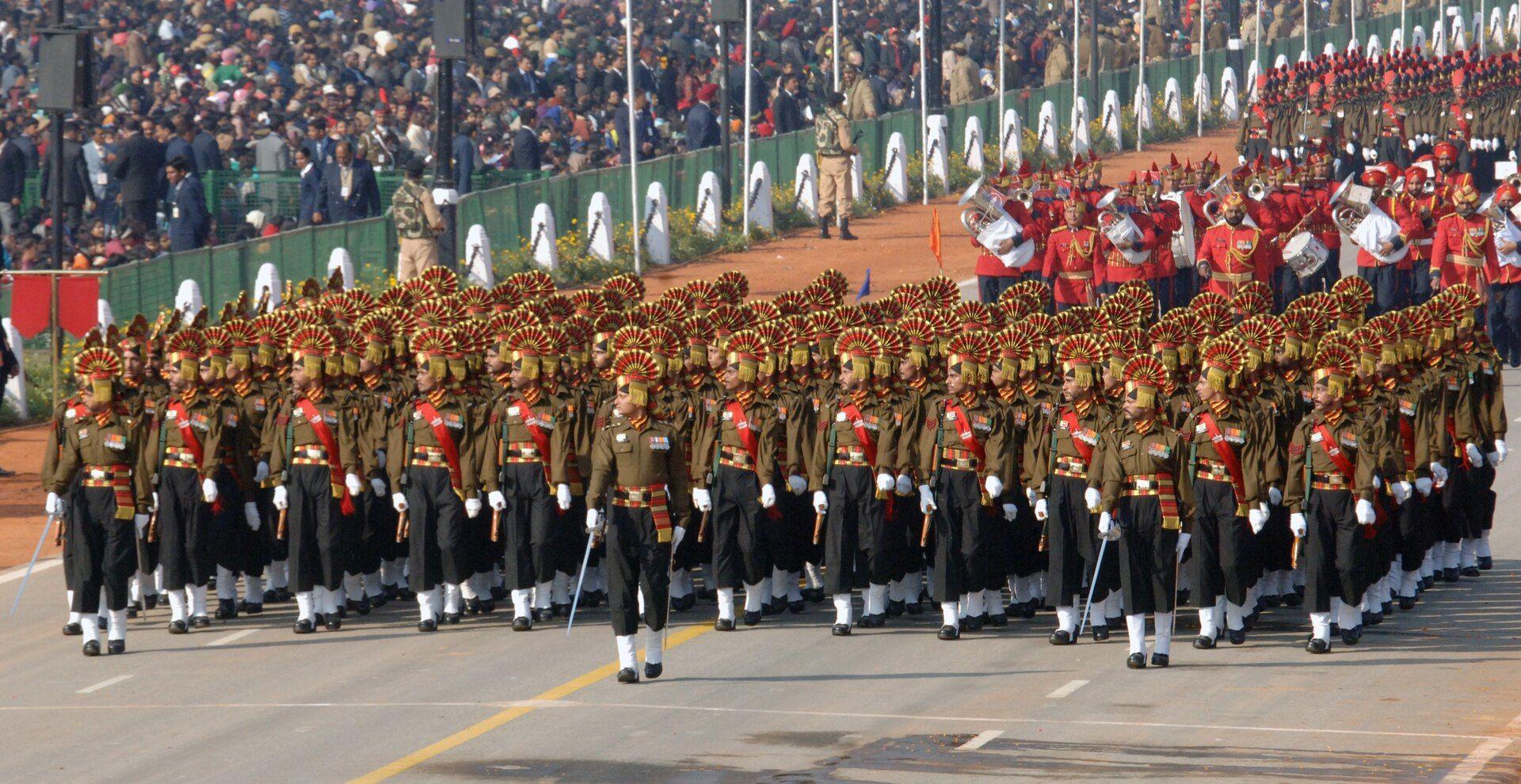
The President of India is the regiment's Colonel-in-Chief, and the Chief of the Army Staff is its Honorary Colonel. On 5 September 2001 General S. Padmanabhan formally took over that appointment at a ceremony in South Block. The Press Information Bureau release for the occasion described the Guards as the Army's first all-India, all-class infantry regiment, with mechanised battalions, reconnaissance and support battalions, anti-tank guided missile battalions and regular infantry battalions.
At a glance
- Raised: 1949
- Regimental centre: Kamptee, Maharashtra
- Motto: Pahla Hamesha Pahla (First Always First)
- War cry: Garud Ka Hun Bol Pyare
Cover image: Jean-Paul GIBERT, Public domain, via Wikimedia Commons. Resized for this page. https://commons.wikimedia.org/wiki/File:Brigade_of_the_Guards_Insignia_(India).svg
- Indian Army
- Infantry
- The Brigade of the Guards
Sources
- The Brigade of Guards · Bharat Rakshak
- Honorary Colonel of The Brigade of The Guards (release, 5 September 2001) · Press Information Bureau
- Lance Naik Albert Ekka (Param Yoddhas) · National War Memorial, Ministry of Defence
- Naik Jadunath Singh (Param Yoddhas) · National War Memorial, Ministry of Defence
- Albert Ekka, braveheart from Jharkhand · The Tribune