Lieutenant Colonel Ardeshir Burzorji Tarapore, Param Vir Chakra
Lt Col A. B. Tarapore led Poona Horse for six days in the Sialkot sector in September 1965, fighting on while wounded, and died in the battle.
Vetnet Editorial
5 min read
At a glance
- Award
- Param Vir Chakra (posthumous)
- Unit
- Poona Horse (17 Horse), commanding officer
- Action
- 11–16 September 1965, Phillora to Jassoran, Sialkot sector
- Tank losses (citation)
- About 60 enemy tanks against 9 of the regiment's own
- Born
- 18 August 1923, Mumbai
- Died
- 16 September 1965
- Commissioned
- 1 January 1942, 7th Hyderabad Infantry, Hyderabad State Forces
- Battle honours
- Phillora and Butur Dograndi, awarded to Poona Horse
Six Days from Phillora to Jassoran
On 11 September 1965, Poona Horse was moving between Phillora and Chawinda in the Sialkot sector, tasked with the main armoured thrust to capture Phillora. Heavy armour counter-attacked from Wazirwali. Lieutenant Colonel Ardeshir Burzorji Tarapore, at the head of the regiment, held his ground and attacked Phillora with one squadron and an infantry battalion in support.
He was wounded in that action and refused evacuation.
On 14 September he led the regiment to capture Wazirwali. On 16 September it took Jassoran and Butur Dograndi. His own tank was hit several times, and by holding both places the regiment allowed infantry to attack Chawinda from the rear.
Sixty Tanks for Nine
The citation puts enemy losses at approximately sixty tanks against nine of the regiment's own. Tarapore was mortally wounded, and the National War Memorial records that his tank was hit by a shell and caught fire.
Kooshab and the last day
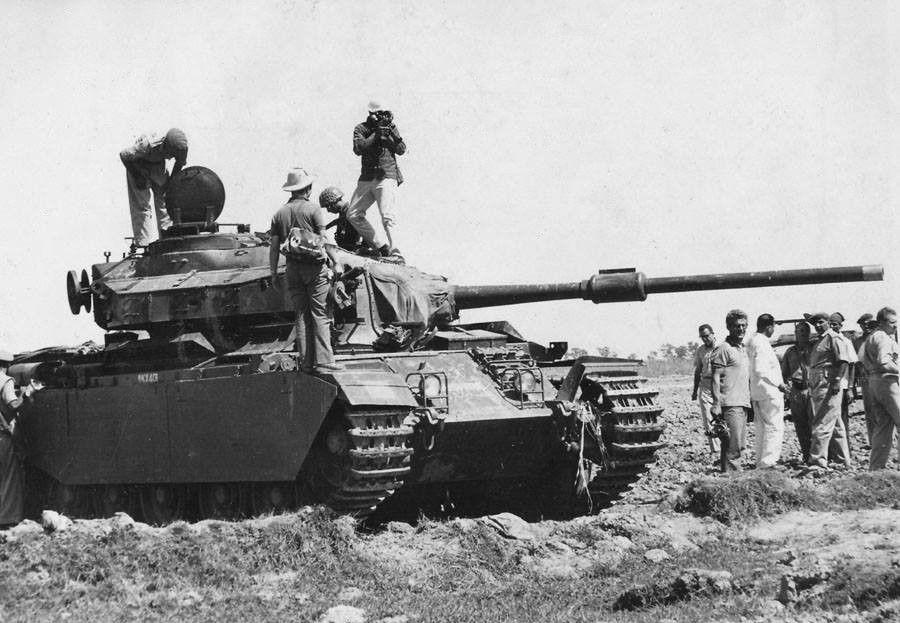
Regimental accounts add detail to the citation. At Phillora on 11 September Tarapore destroyed two Pattons himself and was wounded in the arm by shrapnel. On 16 September B Squadron and 9 Dogra took Jassoran by 0900 hours, while C Squadron and 8 Garhwal Rifles took Butur Dograndi. Tarapore moved up to Butur Dograndi to be with his squadrons, and his tank, Kooshab, was hit there. When the regimental headquarters pulled back to Jassoran that evening, Kooshab would not start and was left behind.
These accounts describe his death differently from the National War Memorial. Writing in the CLAWS journal Scholar Warrior in 2015, from the regimental history, Anuraag Chhibber says Tarapore had left his tank at Jassoran and tea was being passed round when a medium artillery shell landed beside it at 1720 hours on 16 September; he and two soldiers of 9 Dogra were killed by the blast. A second article in the same issue says the regiment's quartermaster was also killed, and that Tarapore was cremated at Jassoran at 0930 hours on 17 September.
Poona Horse was granted the battle honours Phillora and Butur Dograndi. On 22 September 2015, at Rashtrapati Bhavan, President Pranab Mukherjee honoured four people for their part in the 1965 war; Zarine Mahir received the honour on Tarapore's behalf.
Mumbai to Poona Horse
New India Samachar, a Government of India publication, says he was born in Mumbai on 18 August 1923 and began his career in 1942 with the 7 Hyderabad Infantry, joining Poona Horse after Hyderabad merged with India. It records his death on 16 September 1965 and his cremation at Jasoran the next day.
From the Hyderabad State Forces
Family chronicles trace the name to an ancestor, Ratanjiba, a military leader under Chhatrapati Shivaji, who was given a mansab of 100 villages; the chief village was Tarapur. His father, Burzorji, worked in the Customs Department of Hyderabad State and was a scholar of Persian and Urdu. Adi, as he was known, was the second of three children. From the age of seven he boarded at the Sardar Dastur Boys School in Poona, where he did well at athletics, boxing, swimming, tennis and cricket.
After school he was selected for a commission in the Hyderabad State Army and trained at the Officers Training School, Golconda. He wanted to serve in armour. During an inspection by Maj Gen El Edroos, Commander-in-Chief of the State Forces, a recruit dropped a grenade into the throwing bay. Tarapore picked it up and threw it clear, and was hit in the chest by fragments when it burst. When the general congratulated him, he asked for a transfer, and was posted to the 1st Hyderabad Imperial Service Lancers.
After Hyderabad's merger with India he was selected for the Indian Army and joined Poona Horse in 1951. He was later sent to England for an automotive course on the newly acquired Centurion tanks, and served at the Armoured Corps School. Before the 1965 fighting he told one of his squadron commanders, Maj Niranjan Cheema, that if he was killed he was to be cremated, that his son Xerxes should join the Army and Poona Horse, and that his prayer book and ring should go to his wife, Perin.
The citation
On the 11th September 1965, the Poona Horse Regiment, under the command of Lieutenant-Colonel A. B. Tarapore, was assigned the task of delivering the main armoured thrust for capturing Phillora in Sialkot sector in Pakistan. As a preliminary to making a surprise attack on Phillora from the rear, the Regiment was thrusting forward between Phillora and Chawinda, when it was suddenly counter-attacked by the enemy's heavy armour from Wazirwali. Lt.-Col. Tarapore who was then at the head of his Regiment, defied the enemy's charge, held his ground and gallantly attacked Phillora with one of his squadrons supported by an infantry battalion. Though under continuous enemy tank and artillery fire, Lt.-Col. Tarapore remained unperturbed throughout this action and when wounded, he refused to be evacuated.
On the 14th September 1965, though still wounded, he again led his Regiment to capture Wazirwali. Such was his grit and determination that unmindful of his injury, he again gallantly led his Regiment and captured Jassoran and Butur Dograndi on the 16th September 1965. His own tank was hit several times, but despite the odds, he maintained his pivots in both these places and thereby allowed the supporting infantry to attack Chawinda from the rear. Inspired by his leadership, the Regiment fiercely attacked the enemy's heavy armour destroying approximately sixty enemy tanks at a cost of only nine tank casualties, and when Lt.-Col. Tarapore was mortally wounded, the Regiment continued to defy the enemy. The valour displayed by Lieutenant Colonel Ardeshir Burzorji Tarapore in this heroic action which lasted six days was in keeping with the highest traditions of the Indian Army.
Source: Gazette of India. Reproduced as printed, including any errors in the original.
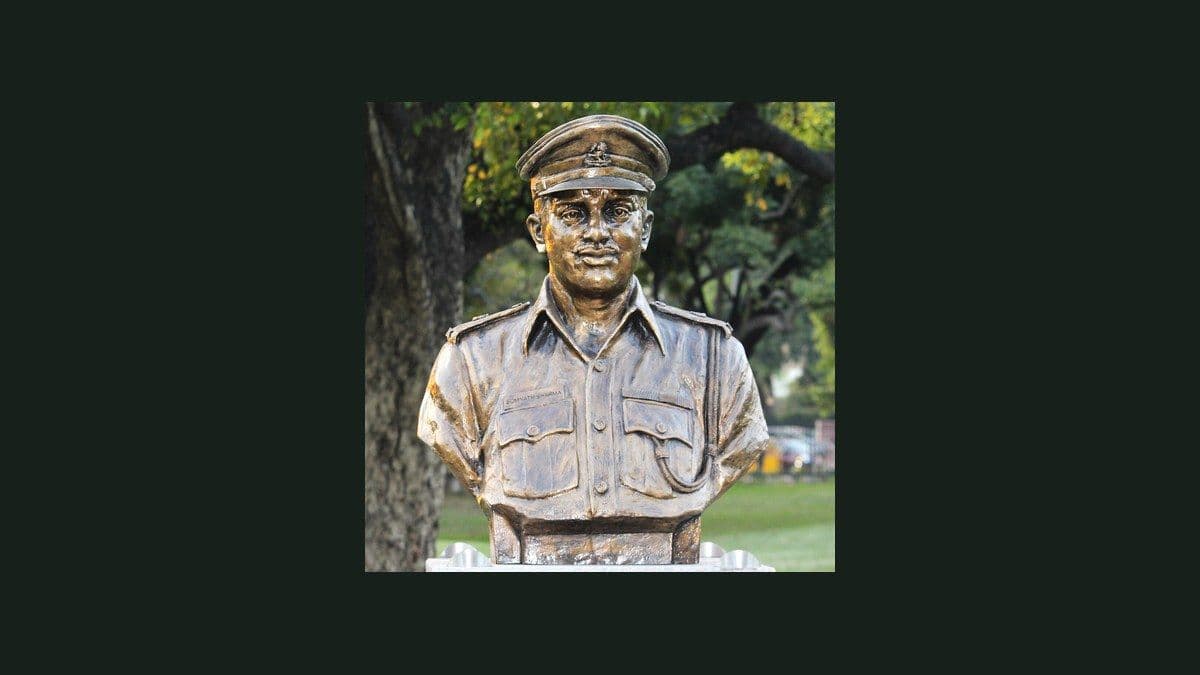
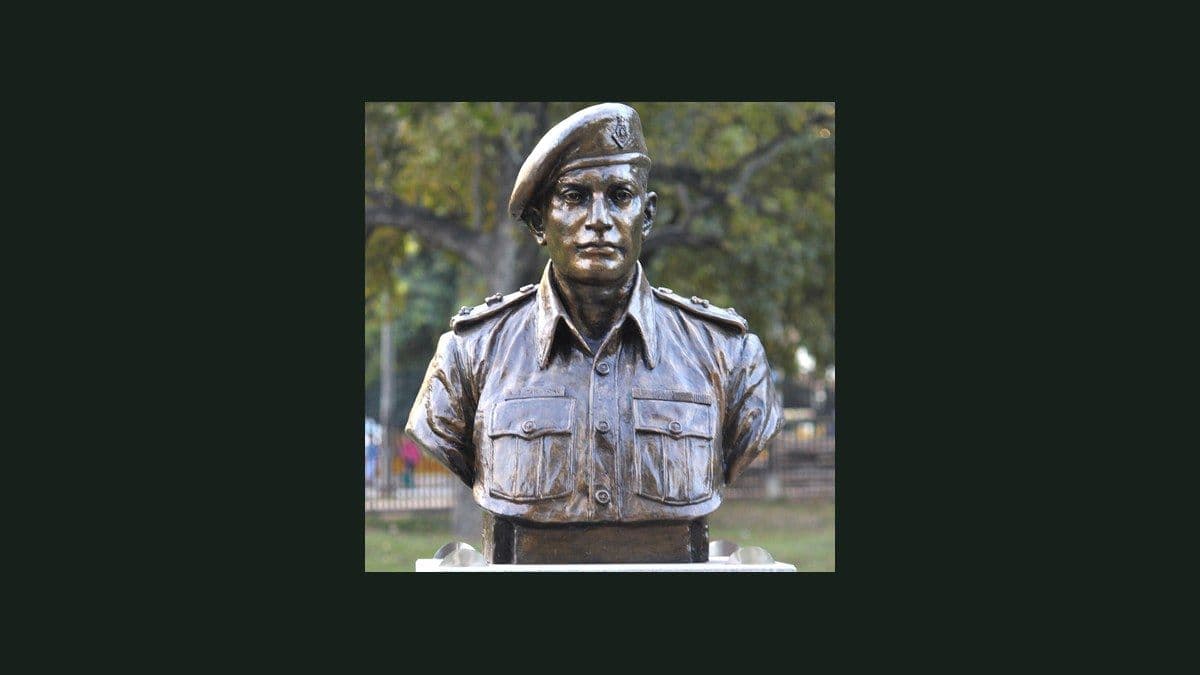
Cover image: Krishna Chaitanya Velaga, CC BY-SA 4.0, via Wikimedia Commons. Resized for this page. https://commons.wikimedia.org/wiki/File:Lt_Col_A_B_Tarapore_statue_at_Param_Yodha_Sthal_Delhi.jpg
- Indian Army
- Param Vir Chakra
- Poona Horse
Sources
- Lieutenant Colonel Ardeshir Burzorji Tarapore (Param Yoddhas) · National War Memorial, Ministry of Defence
- Battle of Phillora: 1965 · National War Memorial, Ministry of Defence
- Defence Minister Rajnath Singh pays tribute to Lt Col Tarapore on Balidan Diwas, hails his bravery in 1965 war · All India Radio News (newsonair.gov.in)
- Veterans commemorate Battle of Phillora · The Tribune
- Lt Col Ardeshir Burzorji Tarapore PVC (IC-5565) · Honourpoint
- Lieutenant Colonel Ardeshir Burzorji Tarapore, PVC, The Poona Horse; and Armour Operations: Indo-Pak Conflict 1965 (Scholar Warrior, Autumn 2015) · Centre for Land Warfare Studies
- President of India Hosts Tea for the Veterans of 1965 War · President's Secretariat