Company Quartermaster Havildar Abdul Hamid, Param Vir Chakra
CQMH Abdul Hamid of 4 Grenadiers engaged Patton tanks from a jeep-mounted recoilless gun near Chima on 10 September 1965 and died in the action.
Vetnet Editorial
5 min read
At a glance
- Award
- Param Vir Chakra (posthumous)
- Unit
- 4 Grenadiers
- Date of action
- 10 September 1965
- Place
- Ahead of Chima village, Khem Karan sector, Punjab
- Born
- 1 July 1933, Ghazipur district, Uttar Pradesh
- Service number
- 2639985
- Battle
- Asal Uttar, 8 to 10 September 1965
- Grave
- Asal Uttar war memorial, near Chima, Tarn Taran district, Punjab
Patton Tanks Ahead of Chima
At 0800 hours on 10 September 1965, a regiment of Pakistani Patton tanks attacked ahead of the village of Chima, on the Bhikkiwind road in the Khem Karan sector. By 0900 the tanks were through the forward positions.
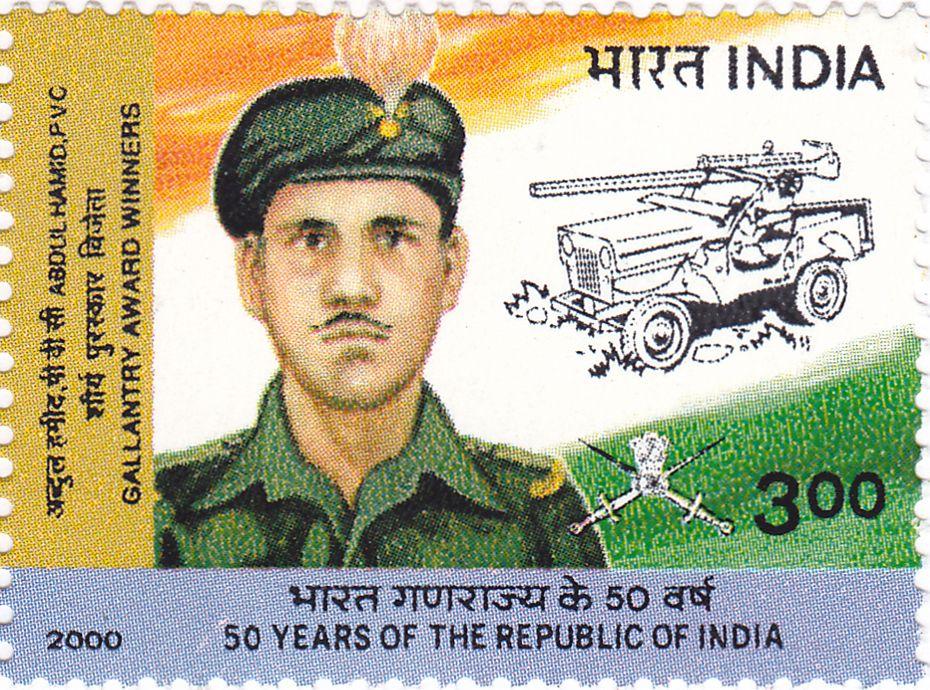
Company Quartermaster Havildar Abdul Hamid of 4 Grenadiers commanded a recoilless gun detachment. He moved his jeep-mounted gun to a flanking position under shelling and tank fire, knocked out the leading tank, shifted position and set a second on fire.
The tanks then found him and turned machine gun and high explosive fire on the jeep. He kept firing at a third tank until a high explosive shell mortally wounded him.
Two Tanks or Seven
The Gazette citation describes two tanks hit and a third under fire when he was struck. The National War Memorial and the Ministry of Defence portal both credit him with seven. This article follows the citation and records the difference.
The defence at Asal Uttar
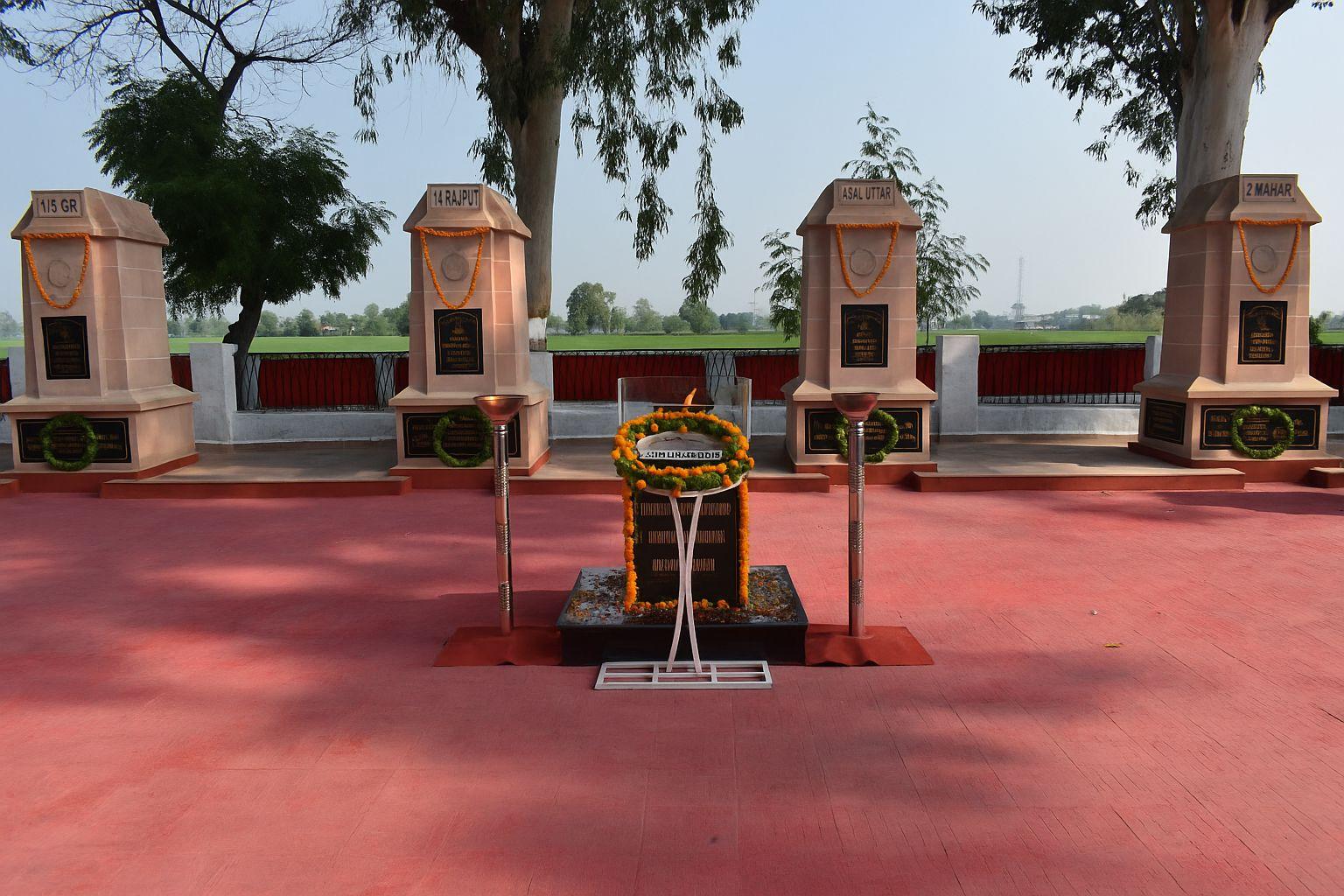
India's offensive in Punjab opened on 6 September 1965. Pakistan answered in the Khem Karan sector with its 1 Armoured Division, aiming for the towns of Raya and Beas and the bridge over the Beas river. Khem Karan, about 5 km from the border, was captured. Lt Gen Harbaksh Singh, the Western Army Commander, records in his War Despatches that 4 Mountain Division occupied a defended sector at Asal Uttar on the morning of 8 September.
By last light on 7 September, 4 Grenadiers held a battalion area south of Chima, astride the Khem Karan to Bhikkiwind road, as part of 7 Mountain Brigade. Cotton and sugarcane fields hid its positions, and its 106 mm recoilless guns were sited along the road. 2 (Independent) Armoured Brigade was placed under the division to stop the Pakistani armour.
The battle ran from 8 to 10 September. Pakistan lost 97 tanks, 72 of them Pattons, by the count of the Centre for Land Warfare Studies. The captured tanks were later displayed near Bhikkiwind, and the place was known for a time as Patton Nagar. On the afternoon of 10 September a group of 4 Grenadiers fired on Pakistani commanders reconnoitring down the road and killed the artillery commander, Brigadier A.R. Shami, whom Indian troops buried on the battlefield with military honours. Khem Karan itself stayed in Pakistani hands until after the ceasefire.
A 2015 article in the CLAWS journal Scholar Warrior, citing unit sources, says his citation was sent on 9 September and not amended after his death the next day, which it gives as one reason the published tank counts differ.
In the Grenadiers Since 1954
The portal says Abdul Hamid was born on 1 July 1933 to Sakina Begum and Mohammad Usman. He joined the Grenadiers on 27 December 1954, and served in the 4th Battalion for the rest of his career. His service number was 2639985.
How he is remembered
The award was announced on 16 September 1965. President Sarvepalli Radhakrishnan presented it to his widow, Rasoolan Bibi, at the Republic Day parade in 1966.
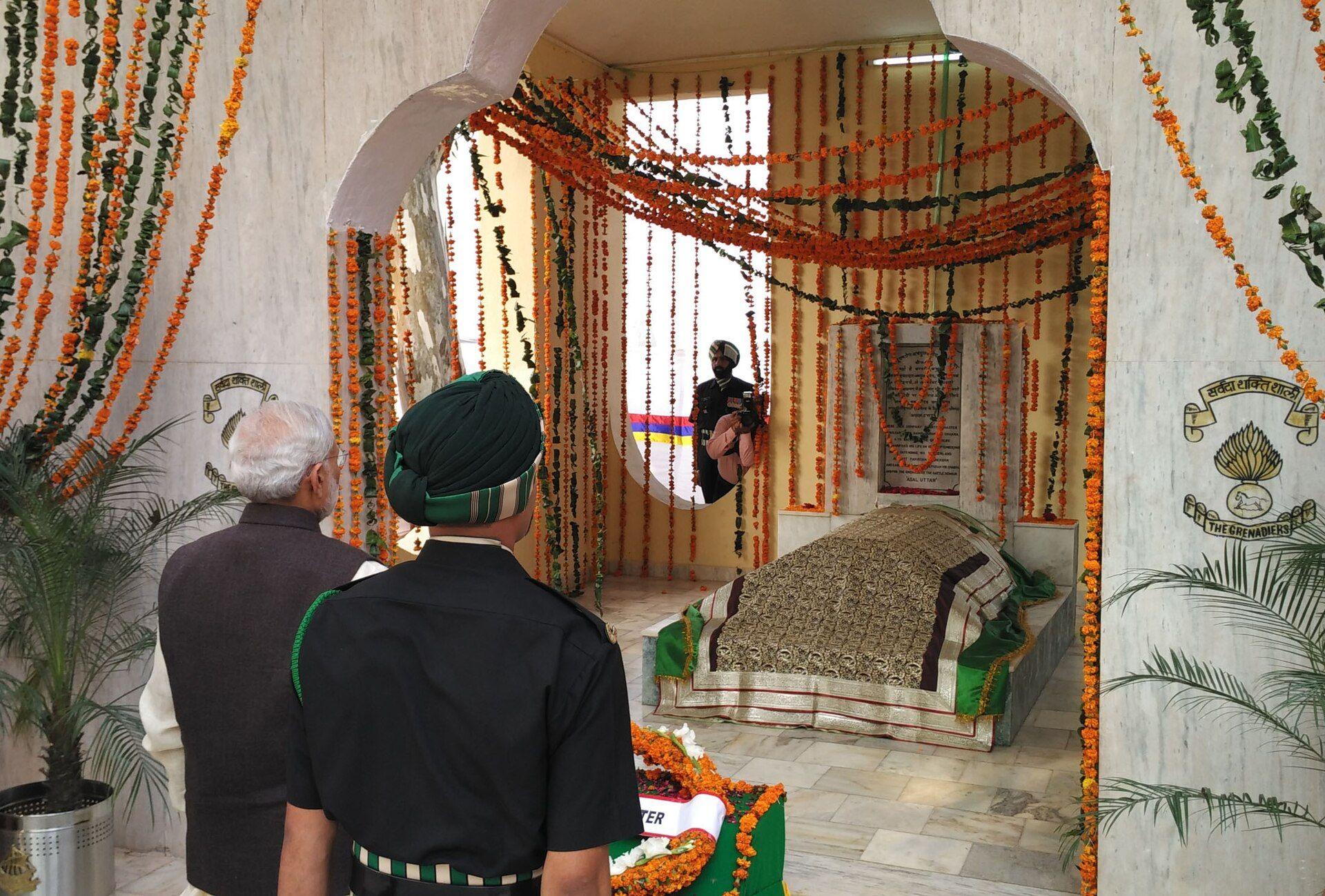
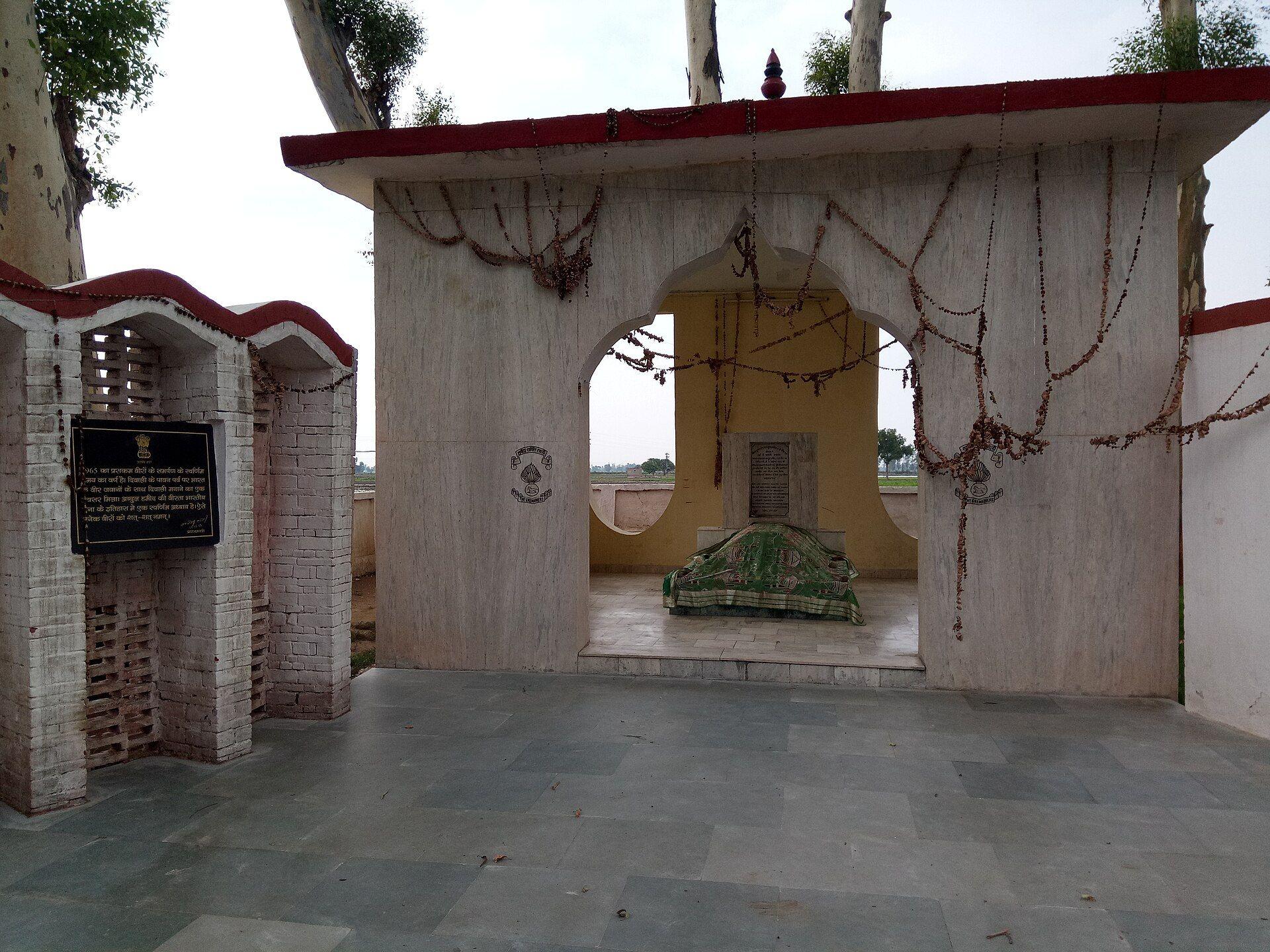
4 Grenadiers built a mausoleum over his grave at Asal Uttar, on the outskirts of Chima village on the Khem Karan to Bhikkiwind road in Tarn Taran district. The grave is less than 100 metres from the grove from which he fired, and a captured Patton tank stands at the entrance of the memorial. 7 Infantry Division maintains the grave, and the Army holds a ceremony there every year. At the ceremony for his 59th martyrdom day, his daughter and two grandsons attended.
The Army Postal Service issued a special cover in his honour on 10 September 1979, and India Post included him in a set of five gallantry stamps on 28 January 2000. In Chetan Anand's 1988 television series Param Vir Chakra, he was played by Naseeruddin Shah. A memorial in his home village of Dhamupur, which had fallen into neglect, was renovated in 2011 by the Flags of Honour Foundation.
On 22 September 2015, at Rashtrapati Bhavan, President Pranab Mukherjee honoured four people for their part in the 1965 war. Abdul Hamid was one of them, and Rasoolan Bibi received the honour on his behalf.
The citation
At 0800 hours on the 10th September 1965, the Pakistani forces launched an attack with a Regiment of Patton tanks on a vital area ahead of village Chima on the Bhikkiwind road in the Khem Karan sector. The attack was preceded by intense artillery shelling. The enemy tanks penetrated the forward positions by 0900 hours. Realising the grave situation Company Quarter Master Havildar Abdul Hamid, who was commander of a recoilless gun detachment, moved out to a flanking position, with his gun mounted on a jeep, under intense enemy shelling and tank fire. Taking an advantageous position, he knocked out the leading enemy tank and then swiftly changing his position, he sent another enemy tank up in flames. By this time the enemy tanks in the area spotted him and brought his jeep under concentrated machine gun and high explosive fire. Undeterred, Company Quarter Master Havildar Abdul Hamid kept on firing on yet another enemy tank from his recoilless gun. While so doing he was mortally wounded by an enemy high explosive shell.
Havildar Abdul Hamid's brave action inspired his comrades to put up a gallant fight and to beat back the heavy tank assault by the enemy. His complete disregard of his personal safety during the operation and his sustained act of bravery in the face of constant enemy fire were a shining example not only to his Unit but to the whole Division and were in the highest traditions of the Indian Army.
Source: Gazette of India. Reproduced as printed, including any errors in the original.
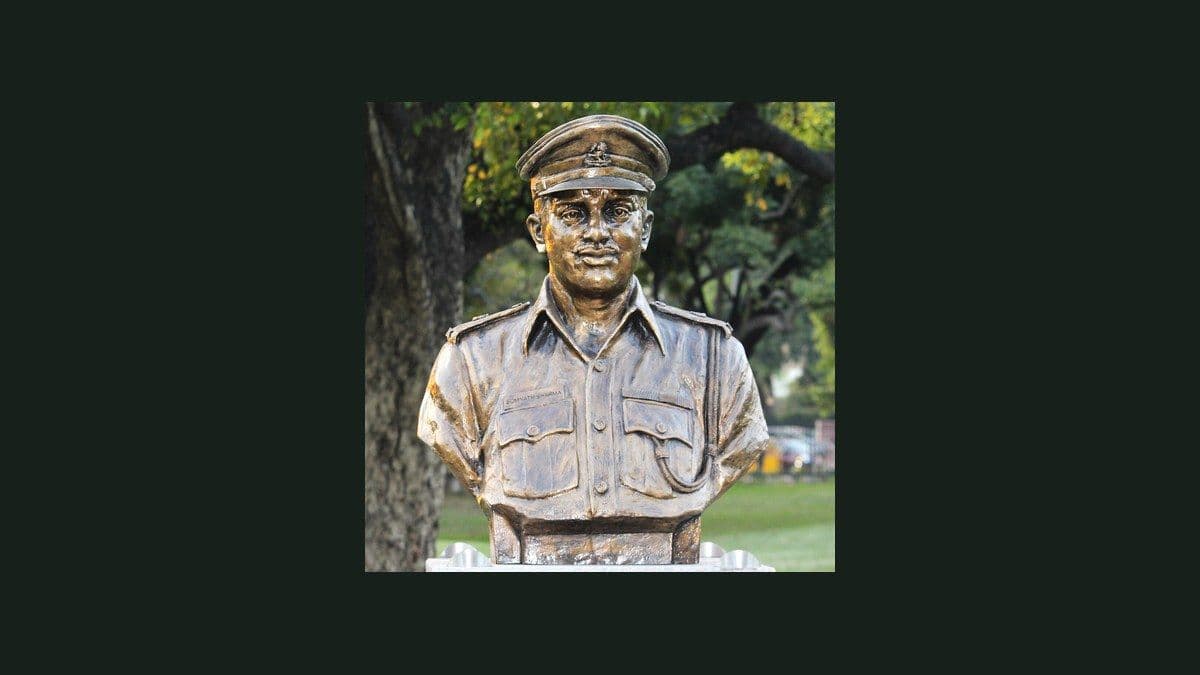
Cover image: Krishna Chaitanya Velaga, CC BY-SA 4.0, via Wikimedia Commons. Resized for this page. https://commons.wikimedia.org/wiki/File:CQHM_Abdul_Hamid_statue_at_Param_Yodha_Sthal_Delhi.jpg
- Indian Army
- Param Vir Chakra
- 4 Grenadiers
Sources
- Param Vir Chakra – Our Heroes · Indian Army
- CQMH Abdul Hamid PVC · Honourpoint
- Explained: The 1965 Battle of Asal Uttar and the role of Abdul Hamid · The Indian Express
- 1965 war hero Abdul Hamid remembered · The Tribune
- Valour Triumphs: CQMH Abdul Hamid (Scholar Warrior, Autumn 2015) · Centre for Land Warfare Studies
- President of India Hosts Tea for the Veterans of 1965 War · President's Secretariat