Operation Safed Sagar, Kargil 1999
The IAF's air campaign at Kargil began on 26 May 1999. It lost two fighters and a Mi-17 in three days, then changed tactics and weapons.
Vetnet Editorial
3 min read
At a glance
- Air strikes began
- 26 May 1999
- Aircraft lost
- MiG-27 and MiG-21 (27 May), Mi-17 of 152 HU (28 May)
- Main precision type
- Mirage 2000 with laser-guided 1,000 lb bombs
- MoD figures (2024)
- About 5,000 strike missions, 350 recce, 800 escort, 2,000+ helicopter sorties
- CAPS total
- 7,631 sorties (11 May to 24 June 1999)
- Operation Vijay declared complete
- 26 July 1999
- Aircraft committed
- About 60 frontline aircraft, mainly from Srinagar, Avantipur and Udhampur
- First loss to a missile
- Canberra PR57 of No. 106 Squadron hit by a SAM on 21 May 1999
Three aircraft in three days
Air strikes began at first light on 26 May 1999, after the government cleared the Air Force into action the day before on condition that it did not cross the Line of Control. MiG-21s, MiG-23s and MiG-27s attacked camps, dumps and supply routes above Dras, Kargil and Batalik. MiG-21s of No. 17 Squadron had flown reconnaissance from 21 May.
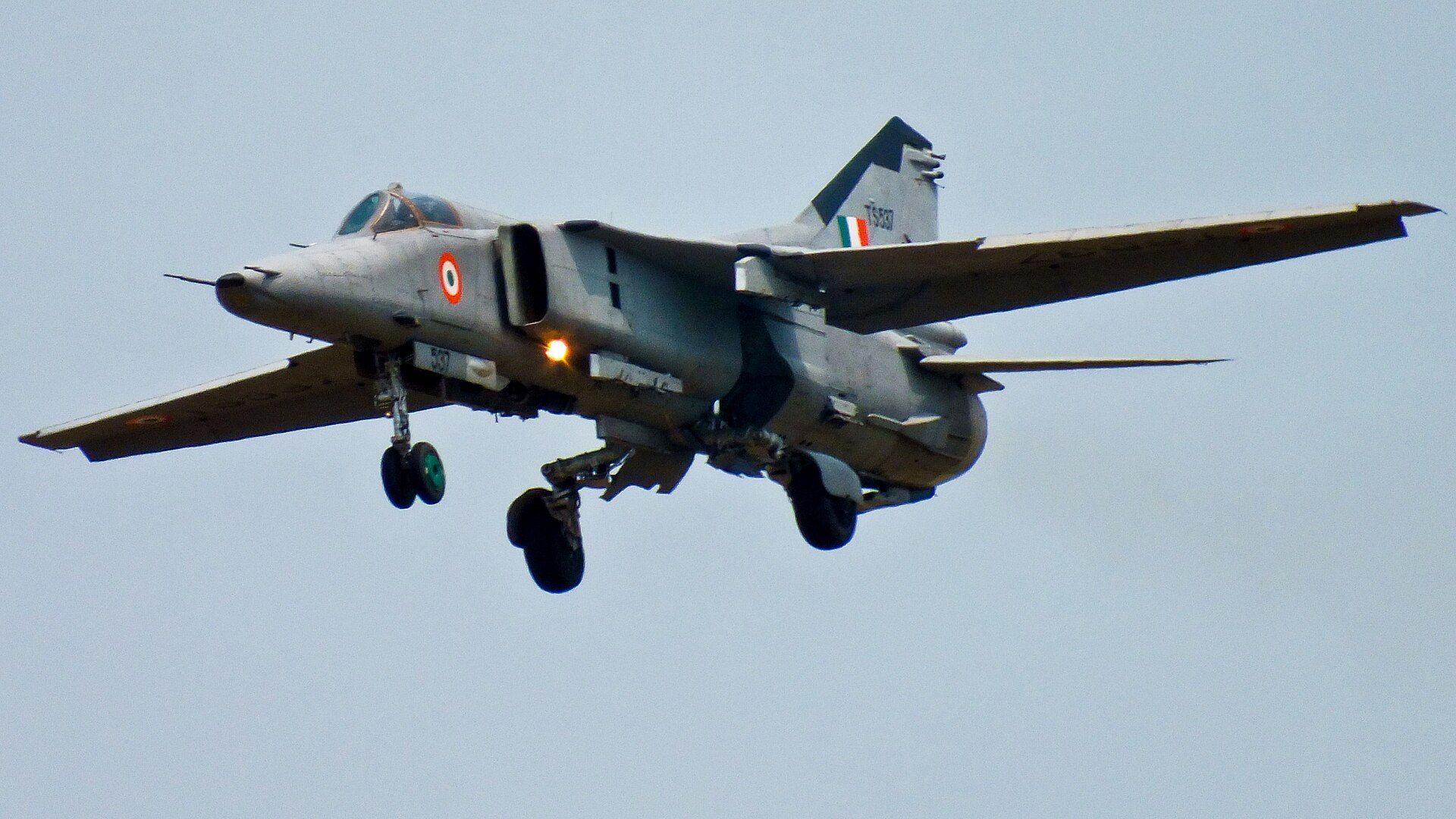
On 27 May the engine of Flight Lieutenant K. Nachiketa's MiG-27 flamed out after an attack in the Batalik sub-sector. He ejected and was captured, and was later returned through Wagah. Squadron Leader Ajay Ahuja of No. 17 Squadron, about to fly a photo-reconnaissance mission, turned to look for him near Muntho Dhalo. Ahuja found the crash site and passed its position to rescue helicopters, then his MiG-21 was hit by a surface-to-air missile. He ejected. His citation for the Vir Chakra, awarded posthumously, records that his body was handed over on 28 May with two bullet injuries.
On 28 May a Mi-17 of 152 Helicopter Unit, flying as Nubra formation, attacked positions at Tololing and was hit by a Stinger as it broke away. Squadron Leader R. Pundir, Flight Lieutenant S. Muhilan and Sergeants P.V.N.R. Prasad and R.K. Sahu were killed, and each received the Vayu Sena Medal (Gallantry) posthumously.
Higher release and laser kits
The losses forced a change. Fighters moved to higher weapon-release altitudes, above the missile envelope, and accuracy suffered. Steep dives, GPS-aided level bombing and targeting pods made up part of the loss.
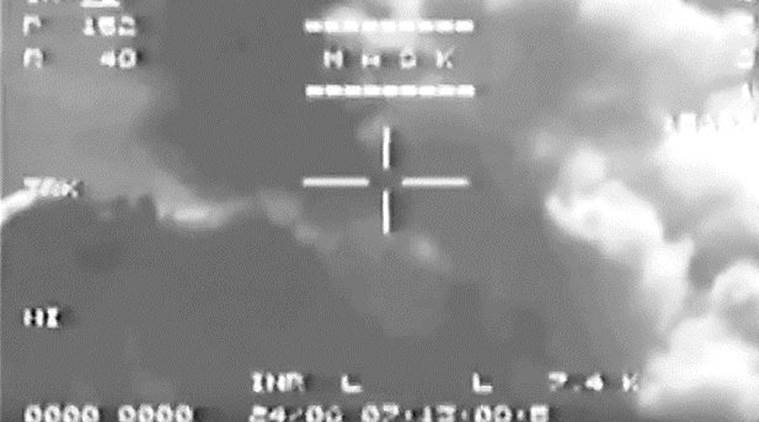
The Mirage 2000 had joined by the first week of June and became the main type for precision attack, using 1,000 lb bombs fitted with laser kits. Muntho Dhalo in the Batalik sub-sector, reported as a Pakistani battalion headquarters, was bombed repeatedly. PTI reports laser-guided bombs on Tiger Hill on 24 June. Published casualty figures for Muntho Dhalo vary and are not settled.
Bases, top cover and the name
The Air Force named its part of the campaign Safed Sagar, Hindi for "white sea", after the view of snow-covered ridges from the cockpit. Most targets lay on or near ridgelines between 14,000 and 18,000 feet, and small enemy positions against rock and snow were hard to pick out.
The first sign of the danger came on 21 May, five days before the strikes began. A Canberra PR57 of No. 106 Squadron, flying reconnaissance near Kargil, was hit in the right engine by an infrared surface-to-air missile, later identified as a Chinese-made Anza. The attacks of 26 May were the first time the Air Force had used weapons in combat in Kashmir since December 1971.
Strike aircraft flew mainly from Srinagar, Avantipur and Udhampur; Srinagar, the closest, was more than 70 miles from the fighting. About 60 frontline aircraft were committed, roughly a quarter of Western Air Command's fighters. Four-ship flights of MiG-29s flew combat air patrols over the battle area, some 460 air defence sorties in all. Pakistani F-16s generally kept 10 to 20 miles on their side of the Line of Control, and no air combat took place. More than 100 surface-to-air missiles were fired at Indian aircraft during the conflict.
Sortie counts that differ
No single total is agreed. A Ministry of Defence statement of 2024 gave around 5,000 strike missions, 350 reconnaissance missions, around 800 escort flights and over 2,000 helicopter sorties. Indian Defence Review gives about 6,500 air sorties, about 1,200 of them by fighters, and a Centre for Air Power Studies brief gives 7,631.
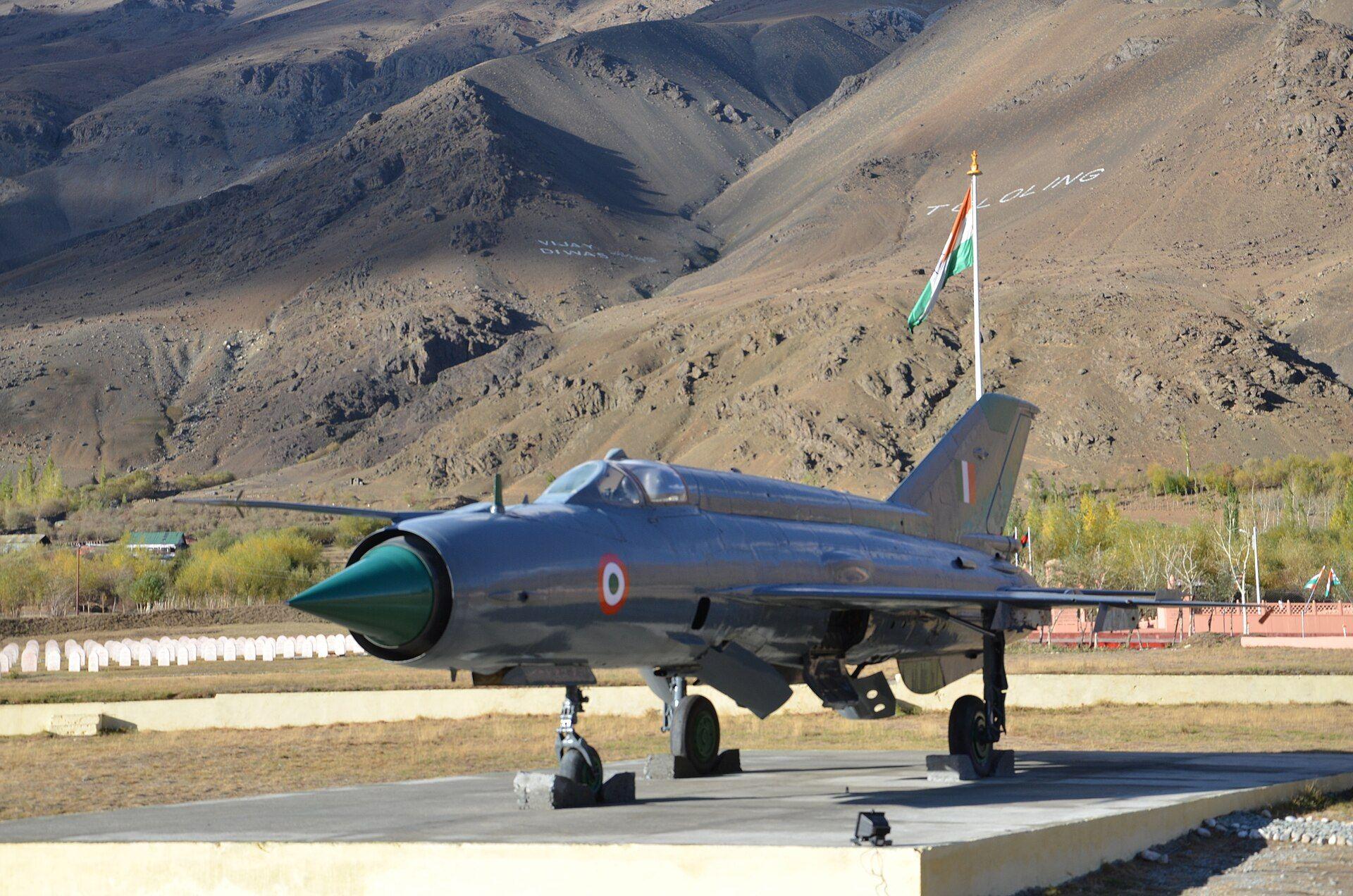
The Army declared Operation Vijay complete on 26 July 1999. A No. 17 Squadron MiG-21 was placed at the Kargil War Memorial at Dras in 2013.
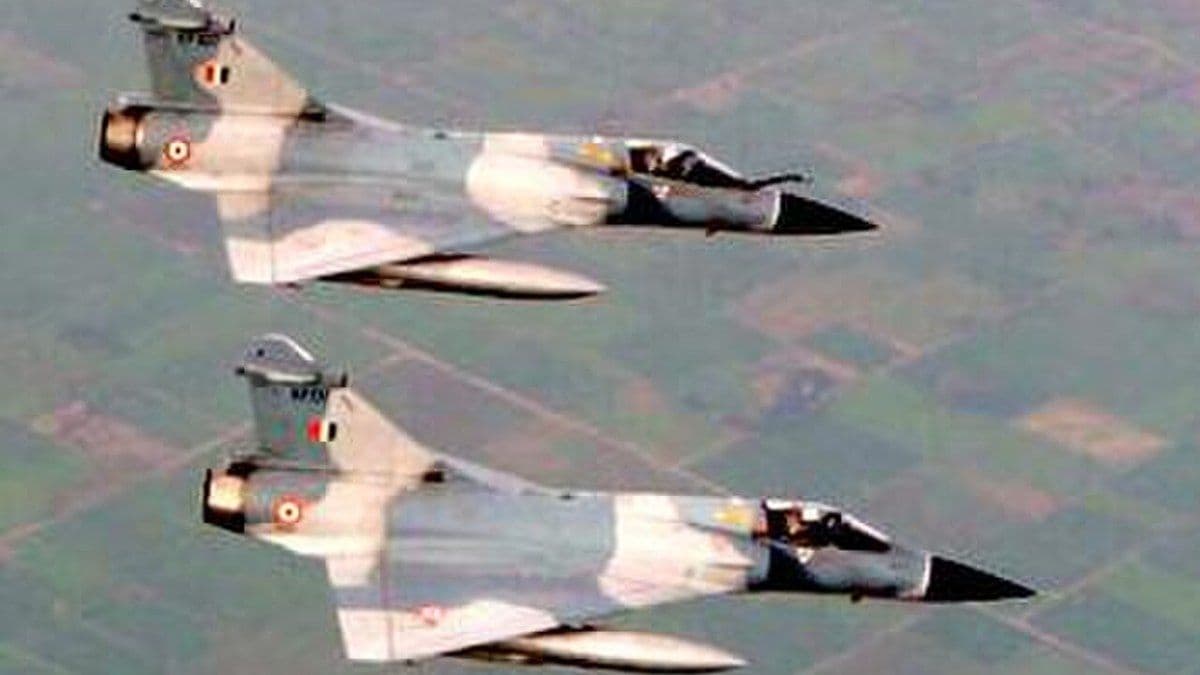
Cover image: US Air Force, Public domain, via Wikimedia Commons. Resized for this page. https://commons.wikimedia.org/wiki/File:Indian_Air_Force_Dassault_Mirage_2000.JPG
- Indian Air Force
- Kargil 1999
Sources
- 25 years of Kargil war: Indian Air Force recalls Op Safed Sagar, pays homage to fallen heroes · The Tribune
- Issue Brief: Kargil Vijay Diwas (Gp Capt Dr D.K. Pandey, Retd), 25 July 2024 · Centre for Air Power Studies
- Airpower at 18,000′: The Indian Air Force in the Kargil War (Benjamin S. Lambeth) · Carnegie Endowment for International Peace
- Sqn Ldr Ajay Ahuja, Vir Chakra (service record and citation) · Bharat Rakshak
- Kargil War: Role played by the Indian Air Force · Indian Defence Review
- Airpower at 18,000': The Indian Air Force in the Kargil War (full report, PDF) · Carnegie Endowment for International Peace