Colonel Yuri Malyshev, Ashoka Chakra
Colonel Yuri Malyshev of the Soviet Air Force commanded Soyuz T-11, which carried India's Rakesh Sharma to Salyut 7 in April 1984.
Vetnet Editorial
3 min read
At a glance
- Award
- Ashoka Chakra (1984)
- Mission
- Soyuz T-11, commander; launched 3 April 1984, Baikonur
- Landed
- 11 April 1984, in the Soyuz T-10 descent module
- Spaceflights
- 2 (Soyuz T-2, 1980; Soyuz T-11, 1984); 11d 19h 59m in space
- Born
- 27 August 1941, Nikolayevsk, Stalingrad region
- Died
- 8 November 1999, Zvyozdny Gorodok
- Selected as cosmonaut
- 7 May 1967
Commander of Soyuz T-11
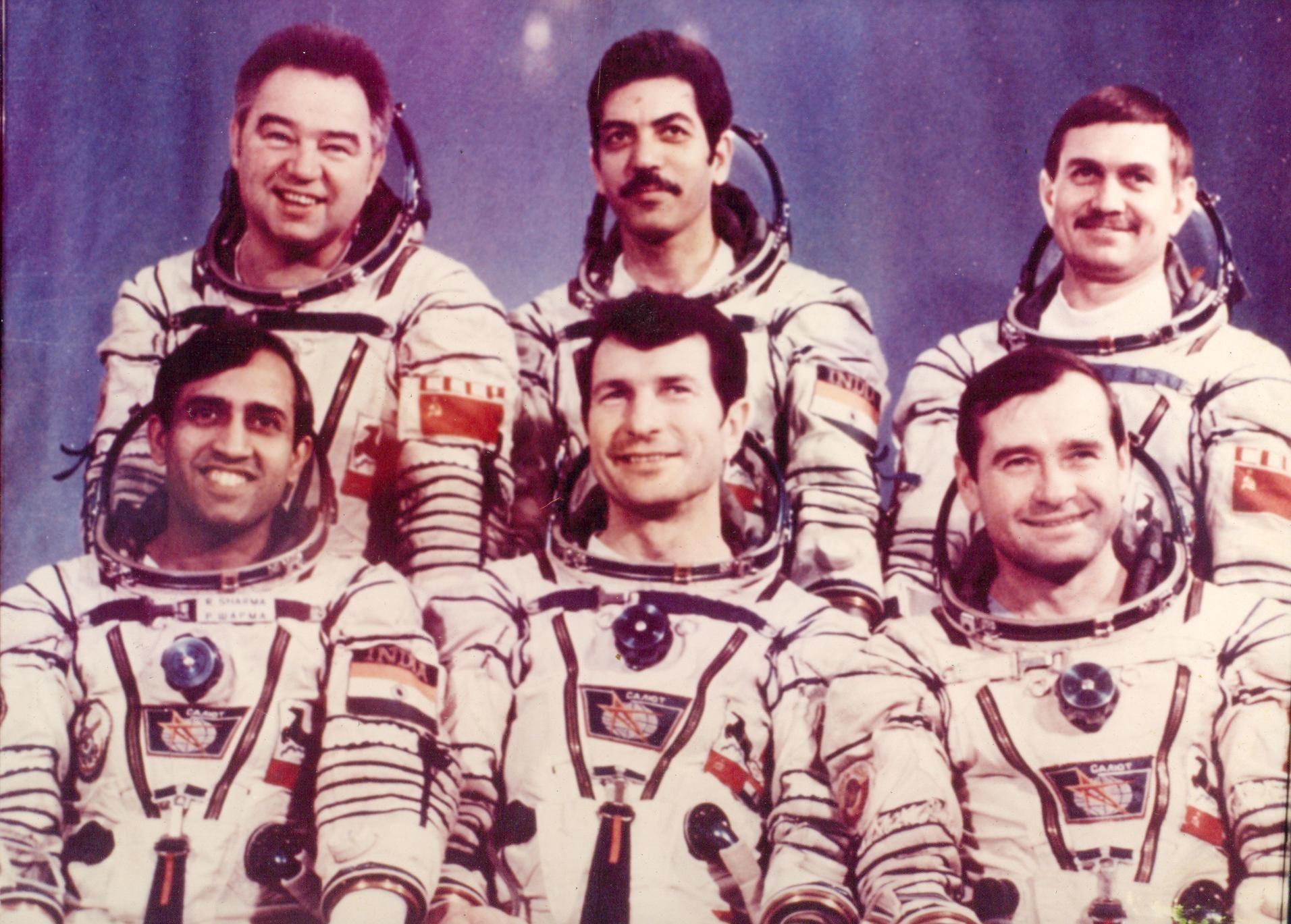
Colonel Yuri Malyshev commanded Soyuz T-11 when it left Baikonur on 3 April 1984. With him were flight engineer Gennady Strekalov and Squadron Leader Rakesh Sharma of the Indian Air Force, the first Indian to orbit in space.
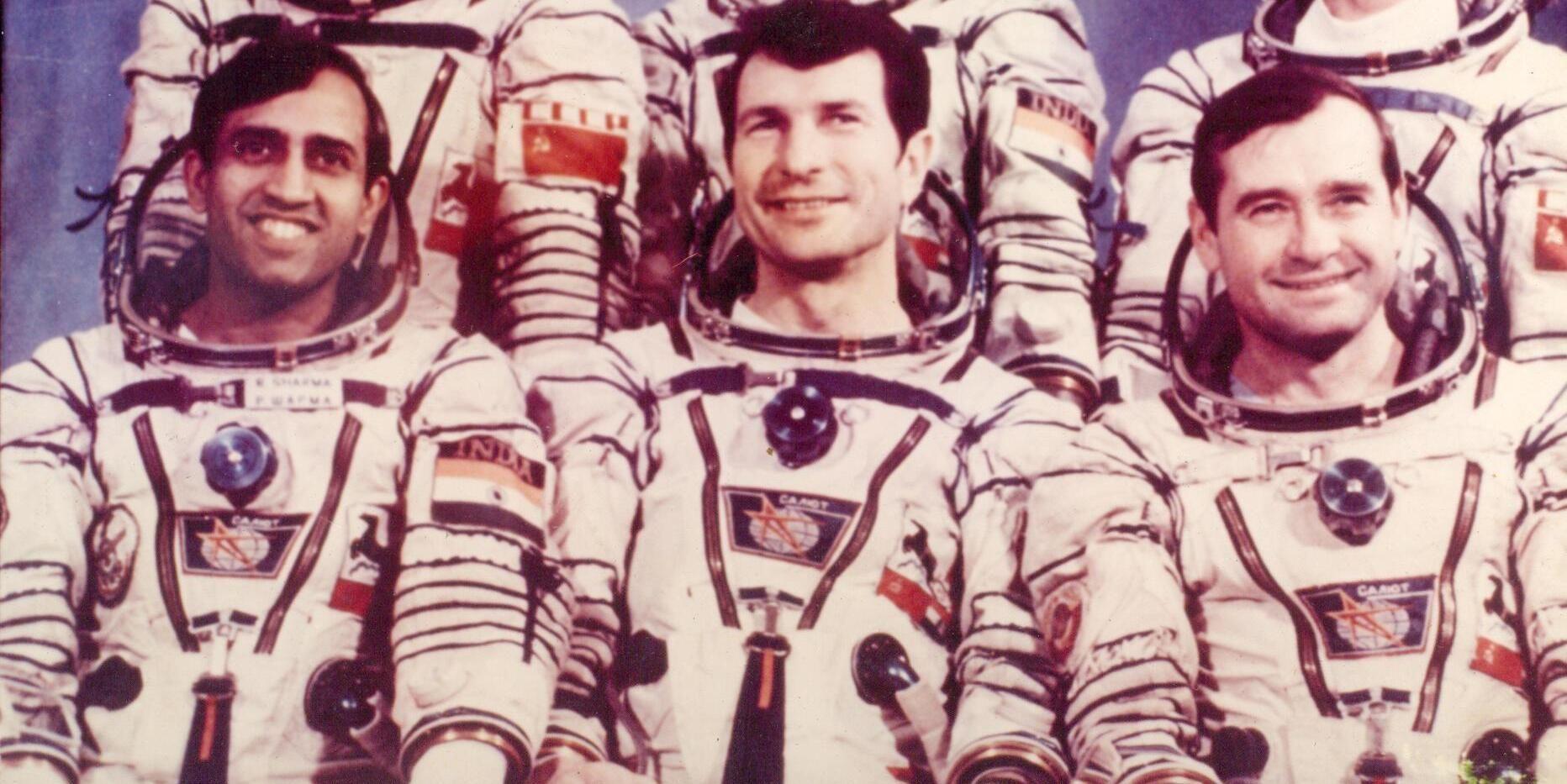
The crew docked with Salyut 7. Sharma's team carried out 43 experimental sessions on the Indo-Soviet programme, mainly in biomedicine and remote sensing, according to published accounts.
The three landed on 11 April, after 7 days, 21 hours and 40 minutes, in the descent module of Soyuz T-10. India conferred the Ashoka Chakra on all of them.
Eight days with Salyut 7
Soyuz T-11 lifted off from Baikonur at 13:08 UTC on 3 April 1984. After a day of solo flight it docked with Salyut 7 on 4 April, where the visitors worked with the station's third resident crew: Leonid Kizim, Vladimir Solovyov and Oleg Atkov. The backup crew on the ground was Anatoly Berezovoy, Georgy Grechko and Ravish Malhotra of the Indian Air Force.
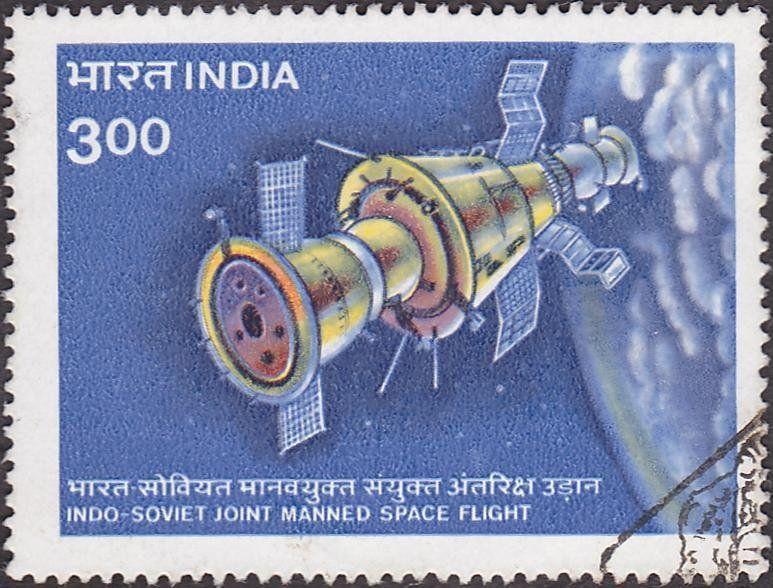
The Earth observation programme concentrated on India, with thousands of photographs taken from orbit and, at the same time, from a laboratory aircraft. Sharma performed five yoga postures every day of the flight, the first yoga experiment conducted in orbit, strapping himself to the station's exercise equipment to hold position. The crew also held a joint television news conference with officials in Moscow and Prime Minister Indira Gandhi.
Malyshev's crew came home in the older Soyuz T-10 and landed 46 km east of Arkalyk. They left their own spacecraft at the station for the resident crew, who flew Soyuz T-11 back to Earth on 2 October 1984.
Soyuz T-2 and Star City
This was his second command. In June 1980 he commanded Soyuz T-2, from 5 to 9 June, a flight of 3 days, 22 hours and 19 minutes. His time in space came to 11 days, 19 hours and 59 minutes across the two missions.
Malyshev was born on 27 August 1941 at Nikolayevsk in the Stalingrad region. He served as a test cosmonaut and left that post on 20 July 1988. He died at Zvyozdny Gorodok, near Moscow, on 8 November 1999.
The Indian Ministry of Defence page spells him Yurie Vasilevich Malyshev and records the award under 1984.
Air Force pilot to Soyuz T-2
Malyshev was an Air Force pilot before he was a cosmonaut. He graduated from the Higher Air Force Academy at Chuguyev, in the Kharkov region, in 1963 and was selected as a cosmonaut on 7 May 1967. He completed basic cosmonaut training in August 1969 and was backup commander for Soyuz 22. He later graduated from the Gagarin Air Force Academy at Monino in 1977, and rose to Colonel in the Soviet Air Force and Deputy Commander of the Command Department at the cosmonaut training centre.
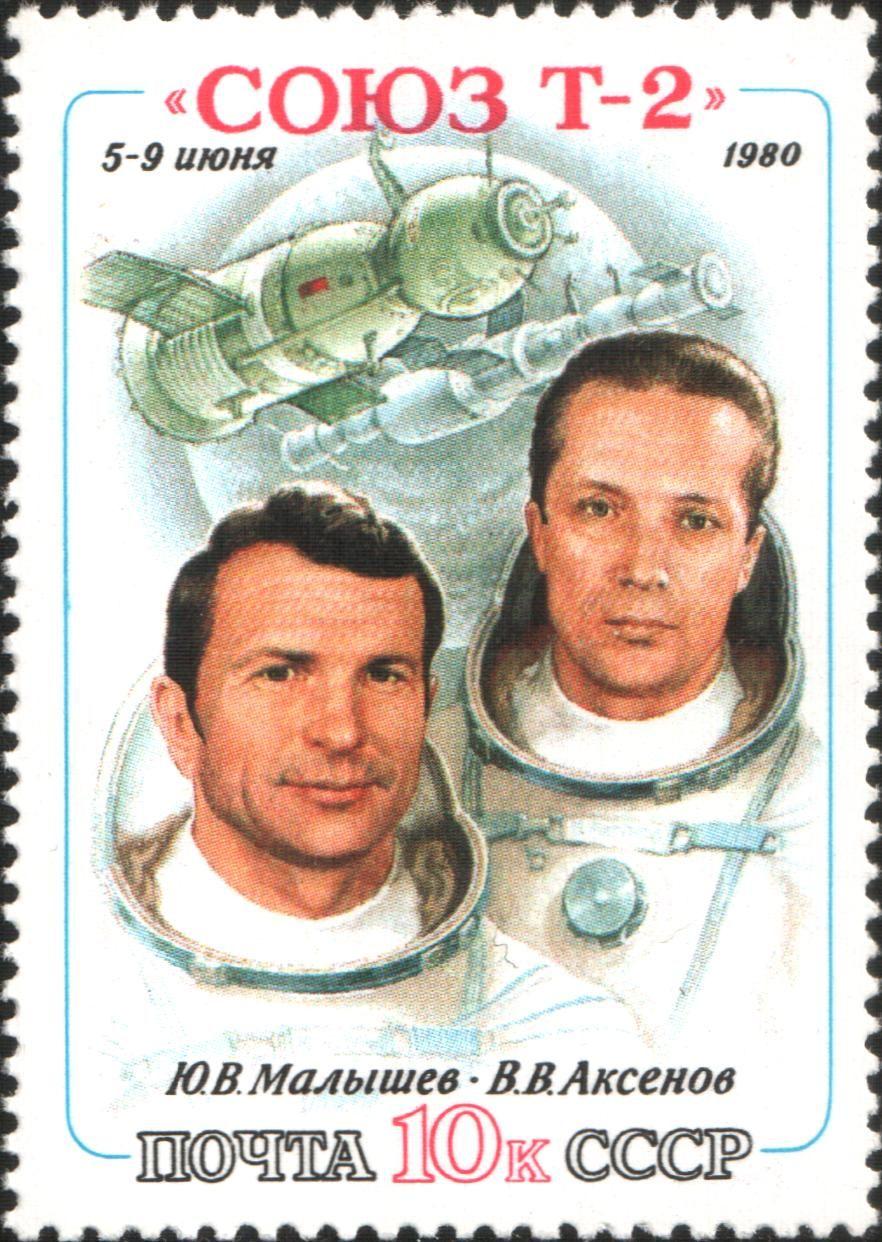
Soyuz T-2, his first flight, was the crewed test of a new version of the Soyuz that could carry three cosmonauts and had a new Argon computer to control docking and re-entry. With flight engineer Vladimir Aksyonov he reached the Salyut 6 station on 6 June 1980. The automatic approach went wrong when the computer left the craft perpendicular to the station, and the crew flew the final 180 metres by hand. They spent two days with the resident crew, photographed and inspected the station as they left, and landed about 200 km south-east of Dzheskasgan.
What the citation recorded
Summary, not the official text: the archived official awards page lists Colonel Yurie Vasilevich Malyshev as an Ashoka Chakra recipient with the year 1984, but its citation field is empty. Published accounts link the award to his command of Soyuz T-11, the Indo-Soviet flight.
Cover image: Post of Soviet Union, Public domain, via Wikimedia Commons. Resized for this page. https://commons.wikimedia.org/wiki/File:%D0%AE.%D0%92._%D0%9C%D0%B0%D0%BB%D1%8B%D1%88%D0%B5%D0%B2.jpg
- Soviet Air Forces
- Ashoka Chakra
- Soyuz T-11
Sources
- Awardees: Ashoka Chakra (archived 31 October 2020) · Gallantry Awards, Ministry of Defence (via Internet Archive)
- Yuri Malyshev: cosmonaut biography · Spacefacts
- Spaceflight mission report: Soyuz T-11 · Spacefacts
- Spaceflight mission report: Soyuz T-2 · Spacefacts
- Soviet-era cosmonaut Yuri Malyshev, flew twice into space, dies at 58 · collectSPACE
- 40th anniversary of Rakesh Sharma's historic spaceflight today · The Tribune