Major Laishram Jyotin Singh, Ashoka Chakra
Maj Laishram Jyotin Singh, an Army doctor, charged an armed suicide attacker with bare hands at an Indian residential compound in Kabul on 26 February 2010.
Vetnet Editorial
4 min read
At a glance
- Award
- Ashoka Chakra (posthumous)
- Corps
- Army Medical Corps
- Date of action
- 26 February 2010
- Place
- Indian Embassy residential compound, Kabul
- Born
- 14 May 1972, Manipur
- Commissioned
- 15 February 2003
- Father
- Laishram Markanda Singh
- Memorials
- Jyotin Memorial Park, Leimakhong; auditorium at the AMC Centre and College, Lucknow
The compound in Kabul
At 6:30 AM on 26 February 2010, attackers struck a guarded residential compound of the Indian Embassy in Kabul. It housed six Army medical officers, four paramedics and two other officers of an English language training team. A vehicle bomb killed three security guards, and a terrorist came in firing and throwing grenades.
Major Laishram Jyotin Singh, a medical officer, crawled out from the debris of his room when he heard shouts from colleagues trapped in a burning room. He charged the armed man with bare hands and pinned him down so that he could not fire at them or throw more grenades.
Singh held on until the attacker detonated his suicide vest. The blast killed them both. The Defence Ministry's account credits him with saving 10 colleagues.
Thirteen days into the posting
Singh had reached Kabul with the Indian Medical Mission on 13 February 2010. He was born on 14 May 1972 and schooled in Manipur, graduated in medicine from the Regional Institute of Medical Science, Imphal, in 1996, and was commissioned into the Army Medical Corps on 15 February 2003. His parents lived at Nambol Awang Leikai in Bishnupur, Manipur.
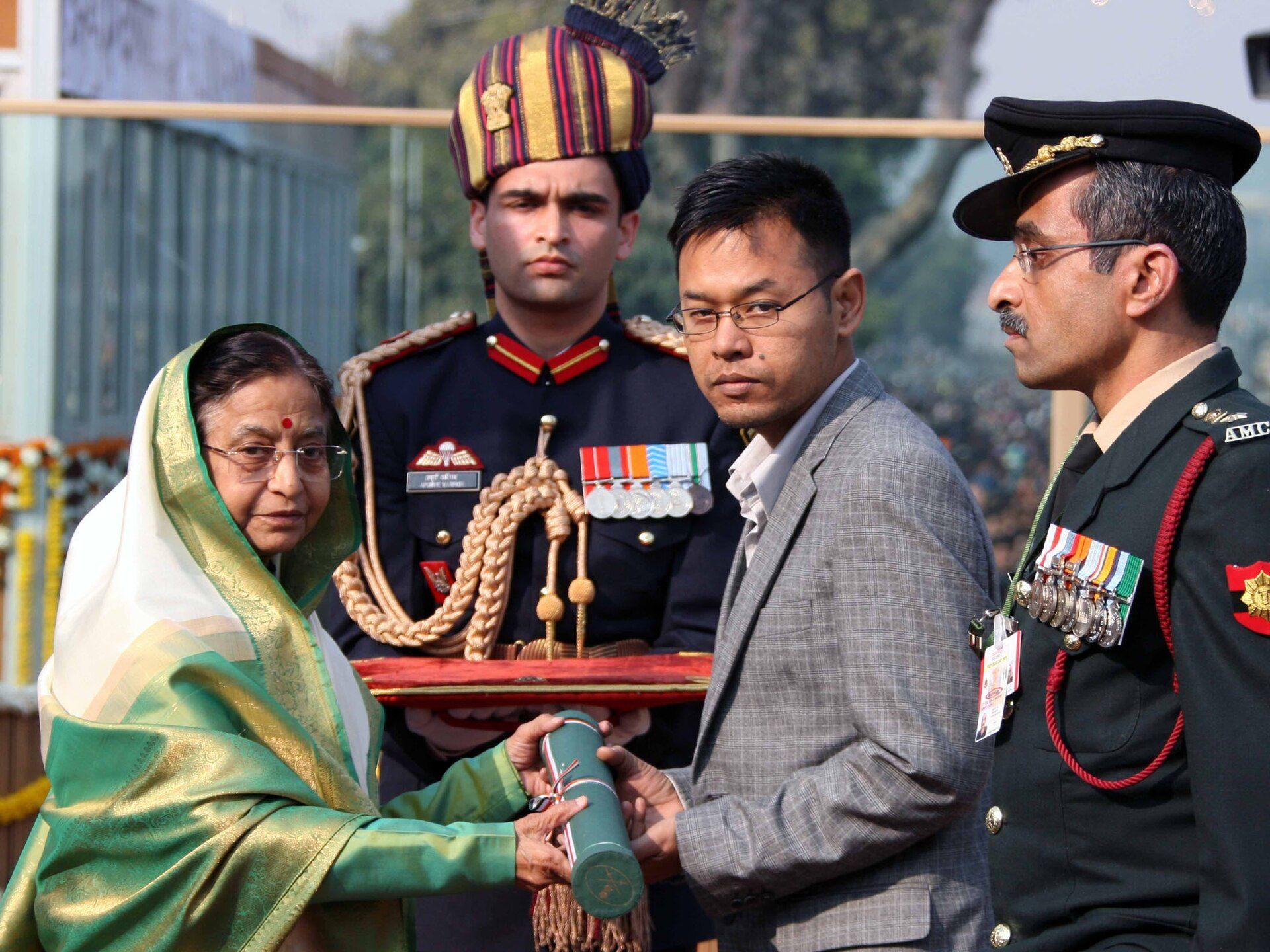
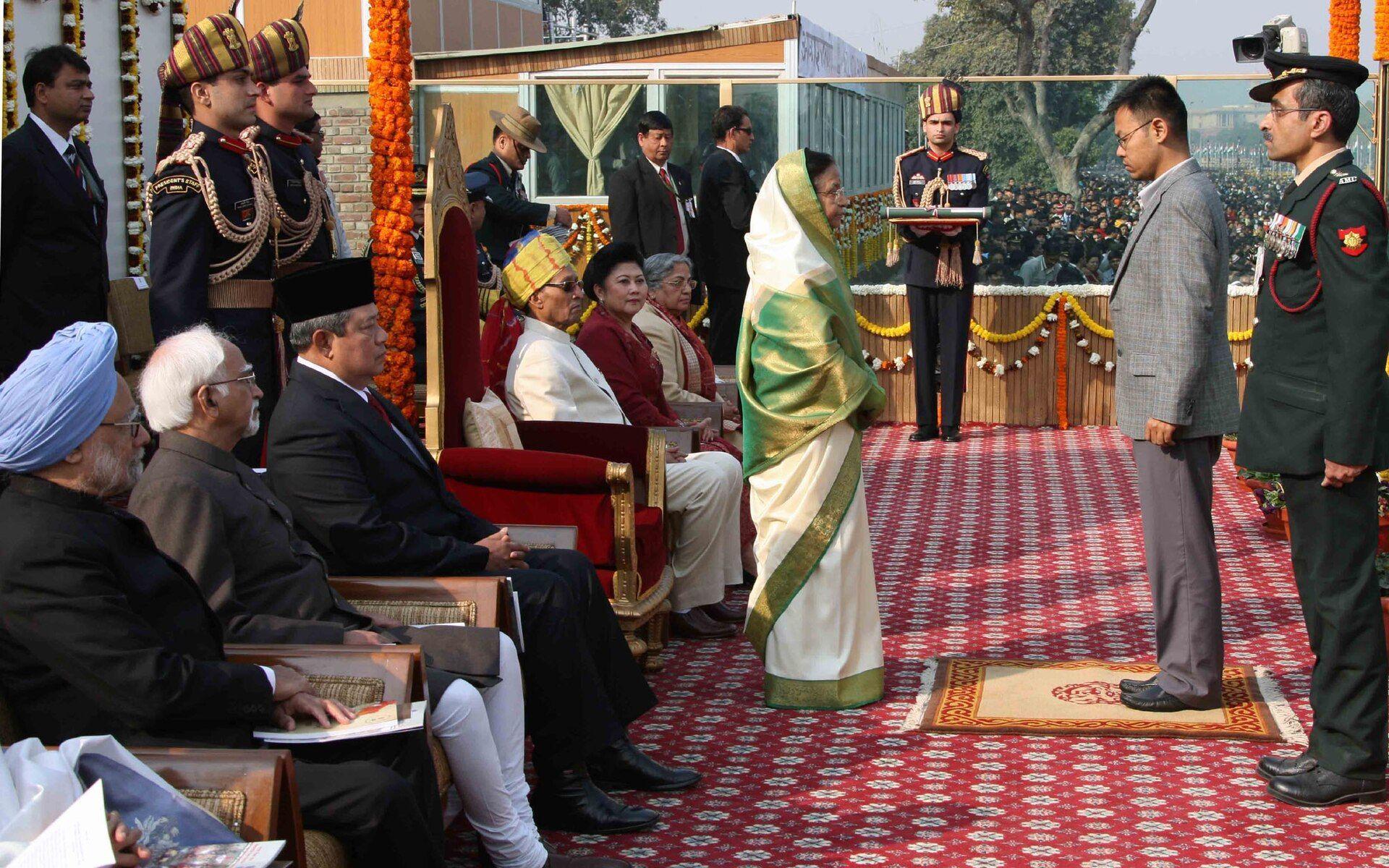
The award was announced on the eve of Independence Day 2010 and conferred at the Republic Day parade on 26 January 2011.
Before Kabul
The Defence Ministry's profile of Major Singh, published on its gallantry awards portal, fills in his life before the Kabul posting. He was the third of four children of Laishram Markanda Singh and Ibeyaima Devi. After his MBBS he completed a two-year postgraduate diploma in sports medicine at Baba Farid University of Health Sciences, Patiala, in 2001. He joined the Army Medical Corps as a short service commissioned officer and was granted a permanent commission on 26 April 2007.
He was first posted with the Border Roads Organisation and then to the Military Hospital at Agartala, where, the profile says, he also provided specialist services to the government hospital and college. He was invited to be part of the fourth Military World Games at Hyderabad in 2007 and the Commonwealth Youth Games at Pune in 2008. The profile also describes him as a keen footballer and bodybuilder.
Official text from the Press Information Bureau
At 0630 hrs of February 26, 2010, a guarded residential compound of Indian Embassy in Kabul, housing six army medical officers, four paramedics and two other Army officers of the English Language Training Team (ELTT) were suddenly attacked by heavily armed and determined terrorist suicide bombers. A terrorist, after detonating a Suicidal Vehicle Borne Improvised Explosive Device (SVBIED) resulting in the death of three security guards, entered the compound to kill any survivors. The terrorist proceed to fire burst of Kalshnikov rounds into the individual rooms and started throwing hand grenades. In the melee, five unarmed officers took shelter in one of the rooms which was subjected to grenade attack and the fire on its roof spread consequently to the bathroom where another group of five officers were sheltered. On hearing shouts of the five officers, Maj Laishram Jytoin Singh crawled out from under the debris of his room. Maj Laishram Jyotin Singh charged with bare hands at the armed terrorist and pinned him down to ensure that the terrorists could no longer lob more grenades or direct fire at the officers cornered in a burning room. He continued to grapple with armed terrorist and did not let him go till the terrorist panicked and detonated his suicide vest, resulting in the instantaneous death of the terrorist and martyrdom of Maj Laishram Jyotin Singh. Maj Laishram Jyotin Singh gave up his life for the sake of five of his colleagues, one of whom unfortunately was still charred to death, and another succumbed to his injuries five days later. His sacrifice, in addition, also saved the lives of two officers, and four paramedics and two Afghan civilians still alive within the compound. For his act of exemplary courage, grit, selflessness and valour in the face of a terrorist attack, resulting in his sacrifice and saving 10 of his colleagues, Major Laishram Jyotin Singh was recommended for the award of Ashok Chakra (Posthumous) on Independence Day, August 15, 2010.
Source: Press Information Bureau release. Reproduced as printed, including any errors in the original.
How he is remembered
The Defence Ministry's profile describes him as the first doctor to receive the Ashoka Chakra, and lists the places that carry his name. A bust of him stands in the Jyotin Memorial Park at Leimakhong in Manipur; its plaque records that it was unveiled by the General Officer Commanding, 57 Mountain Division. At the Army Medical Corps Centre and College in Lucknow, the main auditorium is named the Major Laishram Jyotin Singh, AC, Auditorium, and a roundabout on the campus is named after him.
He was 37 when he died, and was survived by his parents. His mother later inaugurated a new residential building, the Jyotin Block, together with a bust of him, at a Command Hospital. Indian Railways has also named an electric locomotive after him.
- Indian Army
- Ashoka Chakra
- Army Medical Corps
Sources
- Major Laishram Jyotin Singh, Ashoka Chakra (Posthumous): awardee profile and citation · Gallantry Awards Portal, Ministry of Defence
- Major Laishram Jyotin Singh: biography, citation and memorials (PDF) · Gallantry Awards Portal, Ministry of Defence
- Army's Kabul mission doctor to receive Ashoka Chakra · StratPost
- Major who died saving 10 colleagues in Kabul gets Ashok Chakra · The Tribune
- Photo: President Pratibha Patil confers the Ashoka Chakra on Major Laishram Jyotin Singh (posthumous), Republic Day 2011 · Press Information Bureau
- Major Laishram Jyotin Singh, AC (Service No MR-08609M) · Honourpoint
- Ashok Chakra for Major from Manipur · The Assam Tribune