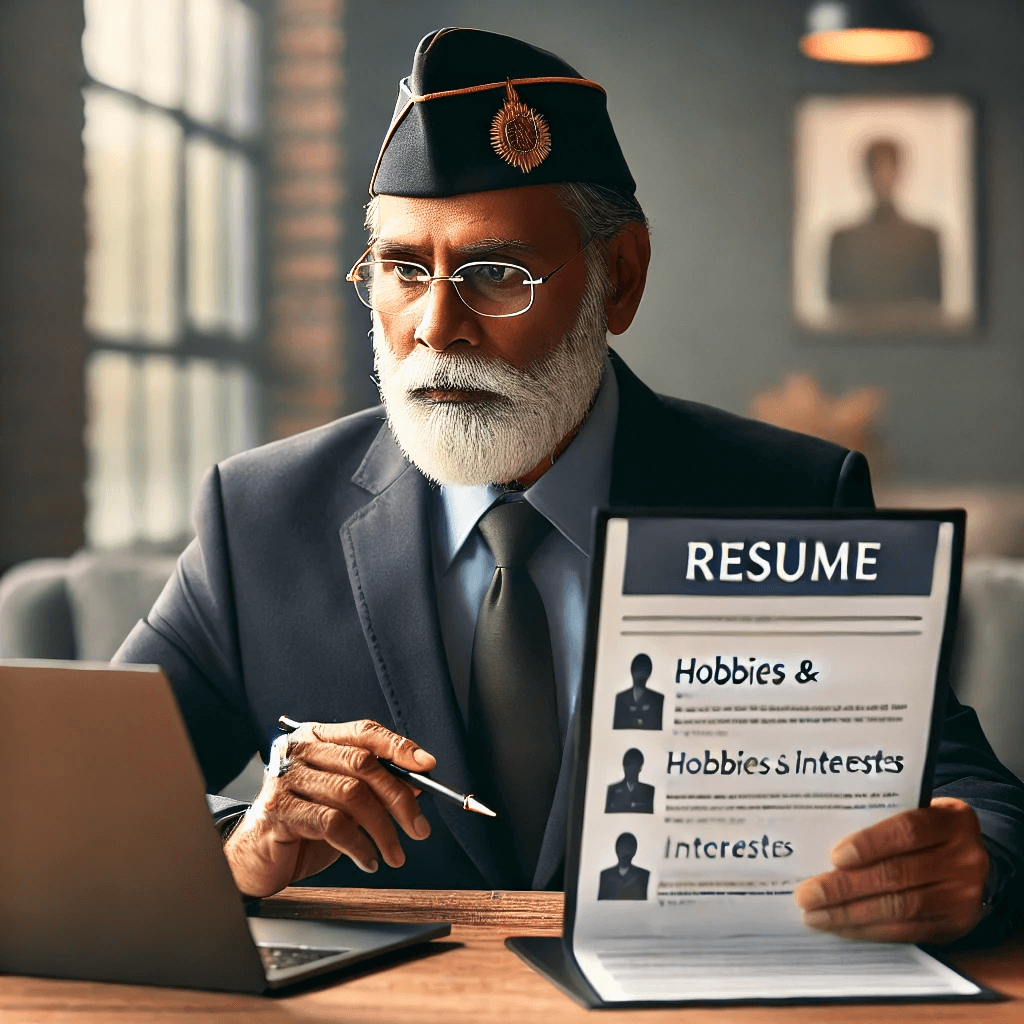
The Dos and Don’ts of Listing Hobbies and Interests on a Resume
Pranesh Rajan
March 3, 2025
Overview
The Dos and Don’ts of Listing Hobbies and Interests on a Resume For many veterans transitioning to civilian careers, crafting a compelling resume is a crucial first step. While listing military experience and technical skills is straightforward, many veterans wonder: Should I include hobbies and interests on my resume? The answer is yes—but only if done strategically. Hobbies and interests can help showcase your personality, highlight transferable skills, and make you stand out. However, including the wrong ones or presenting them poorly can backfire. Here’s how to do it right.
The Dos and Don’ts of Listing Hobbies and Interests on a Resume
Why Hobbies and Interests Matter
Many employers, especially in India’s corporate world, seek professionals who bring not just technical expertise but also well-rounded personalities. For veterans, hobbies and interests can: Show teamwork, leadership, and discipline developed outside the military. Help recruiters connect with you on a personal level. Demonstrate soft skills like problem-solving, creativity, and adaptability. Make your resume more memorable in a competitive job market.
However, listing irrelevant or controversial hobbies can create unnecessary biases, leading to rejection before even getting to the interview stage.
The Dos: How to List Hobbies and Interests Effectively
1. Align with the Job Role
Your hobbies should complement the skills needed for the job. For example:
2. Highlight Leadership & Teamwork
Many veterans have hobbies that naturally demonstrate these skills. Examples:
3. Keep It Brief and Professional
A dedicated “Hobbies & Interests” section should be at the end of the resume, formatted neatly:
Example: Cricket (Team Leadership) | Competitive Shooting | Defense Technology Research | Long-Distance Motorcycling
4. Use Career Compass for ATS-Friendly Formatting
Automated Tracking Systems (ATS) filter resumes before recruiters see them. If hobbies aren’t formatted properly, they may never be noticed. Career Compass, an advanced resume-building tool on VetNet.Social, helps veterans create ATS-friendly resumes, ensuring hobbies and skills are effectively presented.
The Don’ts: Mistakes to Avoid
Avoid Generic Hobbies Listing “Reading”, “Listening to music”, or “Watching movies” adds no value. Instead, be specific: “Reading” → “Reading military history and leadership books” “Listening to music” → “Learning to play the sitar”
Don’t List Controversial or Polarizing Interests Topics like politics, religious debates, or extreme activism can create unconscious bias. It’s best to keep personal ideologies off your resume.
Avoid Hobbies That Don’t Reflect Transferable Skills If your hobby doesn’t relate to the role or highlight relevant skills, leave it out. recruiters.
Don’t Lie About Hobbies If you list something, be ready to discuss it in an interview! Faking an interest in golf just to impress a recruiter could backfire if they ask about your experience on the course.
How VetNet.Social & Career Compass Can Help
Veterans often struggle with translating military experience into civilian-friendly resumes. VetNet.Social offers a support network where veterans can connect with mentors, find job opportunities, and get career guidance.
Additionally, Career Compass, a powerful resume and interview preparation tool on VetNet.Social, helps veterans: Build ATS-optimized resumes. Translate military experience into corporate-friendly language. Get expert advice on resume sections, including hobbies and interests. Prepare for job interviews with mock sessions and feedback.
Conclusion
Hobbies and interests, when listed wisely, can make your resume more engaging and impactful. They provide hiring managers with a glimpse of your personality beyond your work experience. By focusing on relevant, skill-enhancing hobbies and avoiding generic or controversial ones, veterans can stand out in the civilian job market.
Want help optimizing your resume? Join VetNet.Social and use Career Compass today!